12 Step Program for Opioid Use Disorder: Complete Guide to Recovery Success
Did you know that millions of people worldwide are affected by opioid addiction, and many struggle to recover without structured support? Opioid use disorder can quickly disrupt physical health, mental well-being, and daily stability, making it difficult to regain control without the right guidance. Recovery is possible, but it often requires a clear system that supports both the body and the mind.
One widely recognized method is the 12 Step Program for Opioid Use Disorder, which has been used for decades to help individuals build consistency, accountability, and long-term recovery habits. This step-based system provides a clear direction, making it easier to move forward one stage at a time rather than feeling lost in the process.
At Pacific View Detox, individuals can begin their recovery journey with medically supervised detox before moving into structured programs that support lasting change. A guided and step-by-step process can help bring more clarity, reduce uncertainty, and support steady progress throughout recovery.
Objective
This blog explains how the 12-step program supports opioid recovery, outlines each step, and helps readers understand its role in building long-term stability and preventing relapse.
Key Takeaways
- It explains how step-based recovery programs guide individuals through different stages of opioid recovery in a clear and structured way.
- Each of the 12 steps is simplified so readers can easily understand how they support progress over time.
- It highlights why starting with detox can help prepare both the body and mind for ongoing recovery work.
- Common challenges like cravings, relapse, and emotional triggers are discussed along with ways to manage them effectively.
- It helps you decide if a 12-step program is the right fit for your recovery journey and what to expect from the process
What Is Opioid Use Disorder and Why Is It So Challenging to Treat?
Opioid use disorder, often called OUD, is a condition where a person becomes dependent on opioid substances such as prescription painkillers or illegal drugs like heroin. Over time, the brain adapts to these substances, making it difficult to function without them.
Some of the reasons recovery can be difficult include:
- Strong physical withdrawal symptoms
- Intense cravings that can return even after stopping use
- Emotional struggles such as anxiety or depression
- Environmental triggers that increase relapse risk
Because of these factors, structured recovery programs are often more effective than trying to quit without support.
What Is the 12 Step Program and How Does It Work for Opioid Addiction?
The 12-step model was first introduced by Alcoholics Anonymous and later adapted for different types of addiction, including opioids. It focuses on personal growth, accountability, and community support.
The program works by guiding individuals through a series of steps that encourage reflection, honesty, and gradual change. It also connects people with others who understand their experience, which helps reduce isolation during recovery.
The 12 Steps Explained for Opioid Use Disorder Recovery
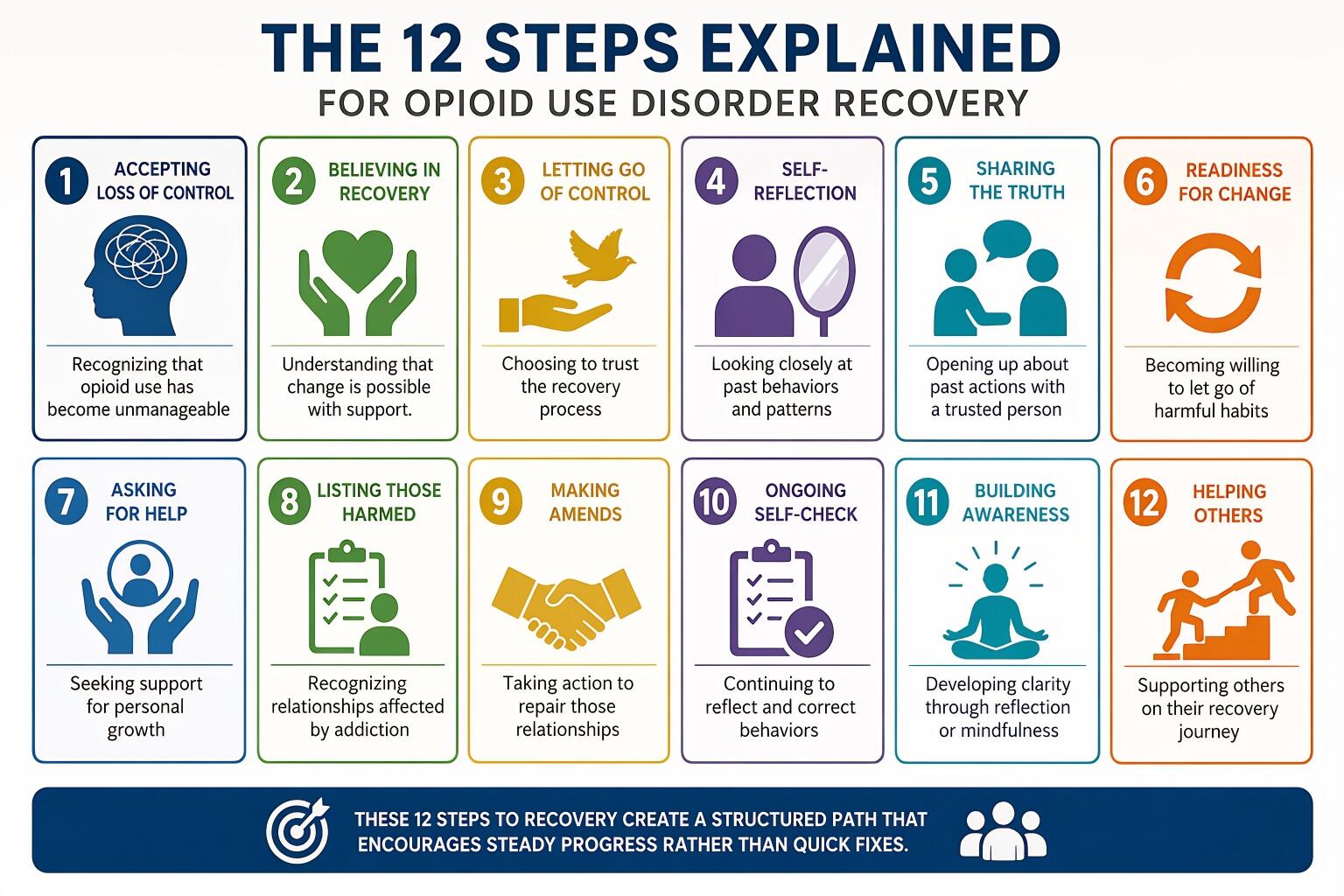
Understanding what the 12 steps are can help you see how each one contributes to recovery:
Step 1: Accepting Loss of Control
Recognizing that opioid use has become unmanageable
Step 2: Believing in Recovery
Understanding that change is possible with support.
Step 3: Letting Go of Control
Choosing to trust the recovery process
Step 4: Self-Reflection
Looking closely at past behaviors and patterns
Step 5: Sharing the Truth
Opening up about past actions with a trusted person
Step 6: Readiness for Change
Becoming willing to let go of harmful habits
Step 7: Asking for Help
Seeking support for personal growth
Step 8: Listing Those Harmed
Recognizing relationships affected by addiction
Step 9: Making Amends
Taking action to repair those relationships
Step 10: Ongoing Self-Check
Continuing to reflect and correct behaviors
Step 11: Building Awareness
Developing clarity through reflection or mindfulness
Step 12: Helping Others
Supporting others on their recovery journey
These 12 steps to recovery create a structured path that encourages steady progress rather than quick fixes.
The Role of Medical Detox in Starting the 12 Step Program
Before beginning any recovery program, the body often needs time to clear substances safely. This is where medical detox for opioid recovery plays a key role.
Detox helps by:
- Managing withdrawal symptoms under supervision
- Stabilizing physical health
- Reducing immediate risks during early recovery
Once detox is complete, individuals are better prepared to engage in structured programs like the 12 steps fully.
Start Your Recovery with the Right Support Today
Struggling with opioid use? Learn what are the 12 steps, explore holistic recovery, and find a path that fits your needs. Get guidance that truly helps.
Common Challenges in Opioid Recovery
Recovery is not always smooth, and many people face obstacles along the way. The 12-step system helps address these challenges in a structured way.
1. Managing Cravings
- Cravings can appear suddenly
- Support groups provide encouragement during difficult moments
2. Preventing Relapse
- Regular meetings create accountability
- Daily reflection helps identify warning signs early
3. Building a Support Network
- Peer groups reduce feelings of isolation
- Sponsors provide guidance and direction
4. Handling Emotional Triggers
- Stress and past experiences can trigger relapse
- Step-based reflection helps process emotions in a healthier way
Benefits of the 12 Step Program for Long-Term Recovery
The 12 Step Program for Opioid Use Disorder is widely used because it offers long-term support rather than short-term solutions.
Some of the key benefits include:
- A clear and structured recovery path
- Ongoing peer support through meetings
- Focus on both emotional and behavioral change
- A system that continues even after initial recovery
Choosing Between 12 Step vs Non 12 Step Programs for Recovery
When comparing 12 step vs non 12 step programs, the main difference lies in structure and philosophy.
| Feature | 12 Step Programs | Non 12 Step Programs |
|---|---|---|
| Structure | Step-based progression | Flexible methods |
| Support | Group-based meetings | Individual or group therapy |
| Focus | Personal accountability | Behavioral strategies |
| Duration | Long-term involvement | Varies by program |
Both options can work, but the choice depends on personal preference and recovery needs.
Is the 12 Step Program Right for You?
Choosing the right recovery path depends on your situation and comfort level. The 12-step model may be helpful if you are looking for structure, peer support, and a long-term system that continues after initial treatment.
For those exploring Southern California addiction treatment, combining detox services with structured recovery programs can provide a more complete experience. Many people also explore what a holistic approach means in recovery, which includes addressing both physical and emotional well-being alongside structured steps.
Conclusion
Recovery from opioid addiction takes time, effort, and the right support system. The 12 Step Program for Opioid Use Disorder offers a clear and structured path that many people have followed successfully over the years. While it may not be the only option available, it remains one of the most widely used methods for building lasting recovery.
Taking the first step can feel difficult, but the right guidance can make the process more manageable and focused. If you or someone you care about is ready to explore recovery options, learning more about the programs offered by Pacific View Detox can help you move forward with clarity and confidence.
FAQs
1. What are the 12 steps in recovery?
The 12 steps are a series of actions designed to help individuals recover from addiction through self-reflection, accountability, and support from others.
2. How long does the 12-step program take?
There is no fixed timeline. Some people work through the steps in months, while others continue practicing them for years.
3. Can the 12-step program work without detox?
Detox is often recommended first, especially for opioid addiction, as it helps the body stabilize before starting recovery work.
4. Are 12-step programs only for alcohol addiction?
No, they are used for many types of addiction, including opioid use disorder.
5. Is a holistic recovery plan better than a structured one?
Both can be effective. Some people benefit from combining structured programs with holistic care for a better balance.