Experiencing Panic After Stopping Xanax Or Benzos? A Medical Detox Plan Can Help
Objective
This blog explains why some people feel intense anxiety, panic, and insomnia after stopping Xanax or other benzodiazepines. It also explains what benzo withdrawal syndrome is, why quitting suddenly can be risky, and how medical detox supports safety, comfort, and relapse prevention. The goal is to make this topic easy to understand for anyone who is scared, confused, or trying to help someone they care about.
Key Takeaways
- Benzo withdrawal syndrome can cause anxiety, panic attacks, shaking, sleep problems, and strong fear after stopping benzodiazepines.
- Xanax withdrawal can feel intense because the drug leaves the body faster than some other benzos.
- Quitting cold turkey can be dangerous and may lead to severe symptoms, including seizures.
- The treatment of benzodiazepine withdrawal often includes medical supervision and a slow taper.
- Xanax detox in a supervised setting can improve safety, reduce distress, and help prevent relapse.
- A good detox plan does more than manage symptoms. It also helps people prepare for recovery after detox.
What Is Benzo Withdrawal Syndrome
Benzo withdrawal syndrome happens when a person stops taking benzodiazepines after the body has become used to them. Benzodiazepines include medicines like Xanax, Ativan, Valium, and Klonopin. These drugs are often used for anxiety, panic, sleep problems, or muscle tension.
At first, they may seem to help. They slow down the nervous system and create a calming effect. But over time, the brain can adjust to having the drug in the system. When the drug is suddenly reduced or stopped, the brain may struggle to find balance again.
That is when withdrawal symptoms can start.
This can be frightening because the symptoms are not only emotional. They can also be physical. A person may feel scared, shaky, restless, unable to sleep, and unsure of what is happening. In many cases, people think they are losing control. What they may actually be experiencing is benzo withdrawal syndrome.
Why Panic Attacks Can Happen After Stopping Xanax
One of the most upsetting parts of withdrawal is panic. A person may stop Xanax and then suddenly feel a rush of fear, chest tightness, fast breathing, sweating, or a pounding heart. It may seem like the anxiety is getting worse instead of better.
There is a reason for that.
Xanax works fast, and it also leaves the body faster than many other benzos. That quick drop can make withdrawal feel stronger. The brain, which had adjusted to the calming effect of the drug, now feels overstimulated. This can lead to panic attacks, especially in the early phase of withdrawal.
These panic episodes can feel very real and very intense. A person may think something terrible is about to happen. They may feel like they cannot breathe. They may become scared to be alone. They may even think they are having a heart attack.
This is one reason Xanax detox should be taken seriously. Panic after stopping benzos is not something to brush off or “just push through.” It can become overwhelming fast, especially without support.
Pacific View detox understands how intense this stage can feel and why safe medical care matters during early withdrawal.
Common Symptoms After Stopping Benzos
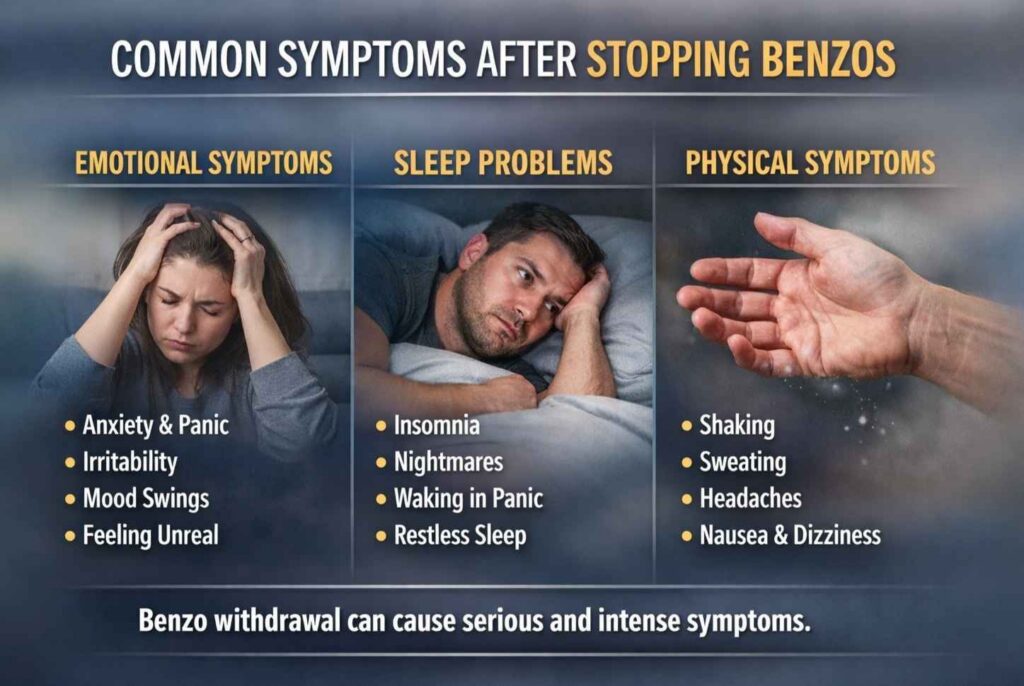
Withdrawal does not look the same for everyone. Some people have mild symptoms. Others have severe symptoms. The type of drug, the dose, how long it was used, and whether other substances were involved can all affect what happens next.
Still, there are some common signs that show up often.
Emotional And Mental Symptoms
These symptoms are common during benzo withdrawal syndrome:
- Anxiety that feels stronger than usual
- Sudden fear or dread
- Panic attacks
- Irritability
- Trouble focusing
- Feeling overwhelmed
- Mood swings
- Feeling detached or unreal
Sleep Symptoms
Sleep is often badly affected during withdrawal. A person may have:
- Trouble falling asleep
- Trouble staying asleep
- Light sleep
- Vivid dreams
- Fear at bedtime
- Waking up in panic
Physical Symptoms
Withdrawal can also affect the body in clear ways, such as:
- Shaking
- Sweating
- Fast heartbeat
- Headaches
- Nausea
- Muscle tension
- Dizziness
- Tingling feelings
- Sensitivity to light or sound
These symptoms can be scary, but they are not random. They are signs that the nervous system is struggling to adjust. This is why the treatment of benzodiazepine withdrawal should be handled with care and not treated like a simple short-term discomfort.
Why Quitting Cold Turkey Is Dangerous
Many people think the fastest way is the best way. They want the drug out of their system right away. They may feel ashamed, tired of depending on it, or desperate to feel normal again. So they stop all at once.
That can be a serious mistake.
Quitting cold turkey after regular benzo use can lead to severe withdrawal symptoms. In some cases, it can lead to medical emergencies. The risks may include:
- Extreme panic attacks
- Severe insomnia
- Hallucinations
- Dangerous spikes in blood pressure
- Confusion
- Seizures
This is why professional care is so important. A person may look stable one hour and then feel much worse later. Withdrawal can change quickly. What begins as anxiety can become a medical crisis in the wrong situation.
A safe plan is not about making detox harder. It is about making detox safer. That is the role of medical detox.
How Medical Detox Helps During Xanax Detox
Medical detox gives a person support while the body adjusts to lower levels of the drug. It is not just about observation. It is a structured process meant to protect health and reduce unnecessary suffering.
1. A Full Assessment
The first step is understanding the person’s situation. A care team may look at:
- What benzo was used
- How long it was used
- The daily dose
- Past withdrawal history
- Other drugs or alcohol involved
- Mental health symptoms
- Risk of seizures
This matters because no two detox plans should be exactly the same.
2. A Safer Taper
In many cases, the treatment of benzodiazepine withdrawal includes a taper. That means the dose is reduced slowly instead of being stopped all at once. A taper gives the brain more time to adjust.
This can help reduce:
- Severe anxiety
- Panic attacks
- Sleep disruption
- Physical distress
- Sudden medical risk
3. Monitoring And Support
A supervised setting allows trained staff to watch symptoms closely. If something changes, help is already there. That can bring a huge sense of relief to someone who feels scared and unstable.
4. Comfort Care
Detox is still hard, but support can make it more manageable. A good plan may include:
- Help with sleep
- Hydration
- Nutrition
- Emotional support
- Symptom monitoring
- A calm environment
This is one reason medical detox is often the safest path during Xanax detox.
The Benefits Of A Detox Plan
A detox plan is not only about getting through the first few days. It is about creating the best chance for a safer and steadier recovery.
Safety
This is the biggest reason people choose supervised detox. Withdrawal from benzos is not something to guess your way through. Monitoring reduces risk and gives faster response if symptoms become severe.
Comfort
No detox is comfortable, but it does not have to feel chaotic and unsupported. When people know what is happening and have help around them, fear often becomes more manageable.
Clear Direction
Withdrawal can make people feel lost. A detox plan gives structure. It tells the person what the next steps are and reminds them they do not have to figure everything out alone.
Relapse Prevention
This part matters more than many people realize. When symptoms become unbearable, some people go back to using just to make the panic stop. That is a very common pattern. A supervised detox lowers that risk by helping the person through the worst part safely.
Pacific View detox can also help people prepare for the next stage of treatment instead of leaving them alone after symptoms settle down.
Why Relapse Prevention Matters
Detox is only the first step. It helps the body begin to stabilize, but it does not solve everything underneath the addiction or dependence.
Some people started taking benzos because they had panic, trauma, sleep problems, or deep stress. Once detox is over, those issues may still be there. If there is no plan for what comes next, the person may feel vulnerable again.
That is why relapse prevention should start during detox, not after.
Helpful next steps may include:
- Therapy
- Anxiety treatment
- Group support
- Education about triggers
- Sleep support
- Family support
- Ongoing addiction treatment
A person who understands their triggers and has a plan is often in a much better position than someone who only tries to “get through detox” and nothing more.
When To Get Help
Some people wait too long because they hope the symptoms will pass on their own. Sometimes they do improve. Sometimes they do not. The problem is that withdrawal can become dangerous before the person realizes how serious it is.
Get professional help right away if someone has:
- Severe panic attacks
- Very little sleep for days
- Confusion
- Hallucinations
- Shaking that is getting worse
- Chest pain
- A history of seizures
- Thoughts of using again just to stop the symptoms
You do not have to wait until things get extreme. Early help is often the safer choice.
Safe Help for Benzo Withdrawal Starts Here
Panic, anxiety, or insomnia after stopping Xanax? Get expert care for benzo withdrawal syndrome and safe treatment of benzodiazepine withdrawal.
Conclusion
Stopping Xanax or other benzos can lead to much more than simple discomfort. It can bring real fear, strong anxiety, insomnia, and repeated panic attacks. For some people, these symptoms are part of benzo withdrawal syndrome, and they can become dangerous without the right support.
That is why quitting cold turkey is risky. The safer option is usually a supervised plan that focuses on stability, symptom relief, and relapse prevention. Medical detox gives people a more controlled way to move through withdrawal, and it creates space for recovery to begin in a safer setting.
If you or someone you care about is struggling after stopping benzos, do not ignore the warning signs. Pacific View detox may be a helpful place to start when safe, medically supervised care is needed.
If you are experiencing panic, severe anxiety, or insomnia after stopping Xanax or benzos, contact addiction treatment center for help and ask about a safe medical detox plan.
FAQs
What Is Benzo Withdrawal Syndrome?
Benzo withdrawal syndrome is the group of symptoms that can happen when someone reduces or stops benzodiazepines after regular use. Symptoms may include anxiety, panic, sleep problems, shaking, sweating, and, in severe cases, seizures.
Can Xanax Withdrawal Cause Panic Attacks?
Yes. Panic attacks can happen during Xanax detox, especially when the drug is stopped too quickly. Because Xanax leaves the body fast, symptoms may feel sudden and intense.
Why Is Quitting Benzos Cold Turkey Dangerous?
Stopping suddenly can shock the nervous system. This may lead to severe anxiety, insomnia, confusion, hallucinations, and seizures. That is why medical detox is often recommended.
What Is The Treatment Of Benzodiazepine Withdrawal?
The treatment of benzodiazepine withdrawal often includes medical supervision, a gradual taper, symptom support, and planning for ongoing care after detox.
How Long Does Xanax Detox Last?
It depends on the person, the dose, and how long the drug was used. Some symptoms begin quickly, while others last longer. The most intense phase often happens early, but sleep and anxiety issues may continue for a while.
Does Medical Detox Help Prevent Relapse?
Yes. A supervised setting can reduce distress, help manage symptoms, and support the next stage of treatment. That makes relapse less likely than trying to go through withdrawal alone.