
California Alcohol Treatment Programs: A Side-by-Side Breakdown for 2026
Finding help for alcohol addiction is rarely a simple decision. Many people looking into alcohol treatment in California are trying to figure out more than just where to go for rehab. They often want to know what kind of care fits their situation, how serious their alcohol use has become, and what recovery may actually look like day to day. For some, a short detox program may be enough to begin recovery, while others may need longer care with medical support and therapy.
The National Institute on Alcohol Abuse and Alcoholism reports that alcohol use disorder affects millions of adults across the United States every year. Even with treatment available, many people wait months or even years before asking for help because they are unsure where to start or what type of program they need. That confusion is one reason many centers now offer different levels of care instead of using the same treatment plan for everyone.
At Pacific View Detox, people often begin by talking through their alcohol use history, withdrawal concerns, and recovery goals before deciding what level of support may fit best. Some individuals need medical supervision during early withdrawal, while others may benefit more from ongoing therapy and structured recovery planning after detox.
Blog Objective
This guide breaks down the different alcohol treatment programs available in California, explains how each level of care works, and helps people understand what type of support may fit their recovery situation in 2026.
Key Takeaways
- Some people only need short-term detox support, while others may require longer treatment and therapy
- Inpatient and outpatient programs work differently and are designed for different recovery situations
- Alcohol withdrawal symptoms can become serious for certain individuals without medical care
- Recovery programs may include detox, counseling, medical support, and relapse prevention planning
- Understanding treatment options ahead of time can help people feel more prepared before starting recovery
Why Alcohol Recovery Needs Can Look Different for Everyone
Not everyone struggles with alcohol in the same way. One person may start looking for help after drinking begins affecting sleep or relationships, while another may already be dealing with health problems linked to long-term alcohol use. Because every situation is different, treatment plans are often built around personal history and current recovery needs.
Some of the biggest things that can affect treatment needs include:
- How often alcohol is being used
- How long drinking has been going on
- Past relapse experiences
- Physical health concerns
- Anxiety, depression, or emotional stress
- Whether support is available at home
This is why recovery programs are offered in different levels of care instead of placing everyone into the same type of treatment.
What Types of Alcohol Treatment Programs Are Available in California?
California has many different recovery programs, and each one is built for a different stage of treatment. Some people start with detox and continue into longer care, while others may only need outpatient support after an assessment.
Alcohol Detox Programs
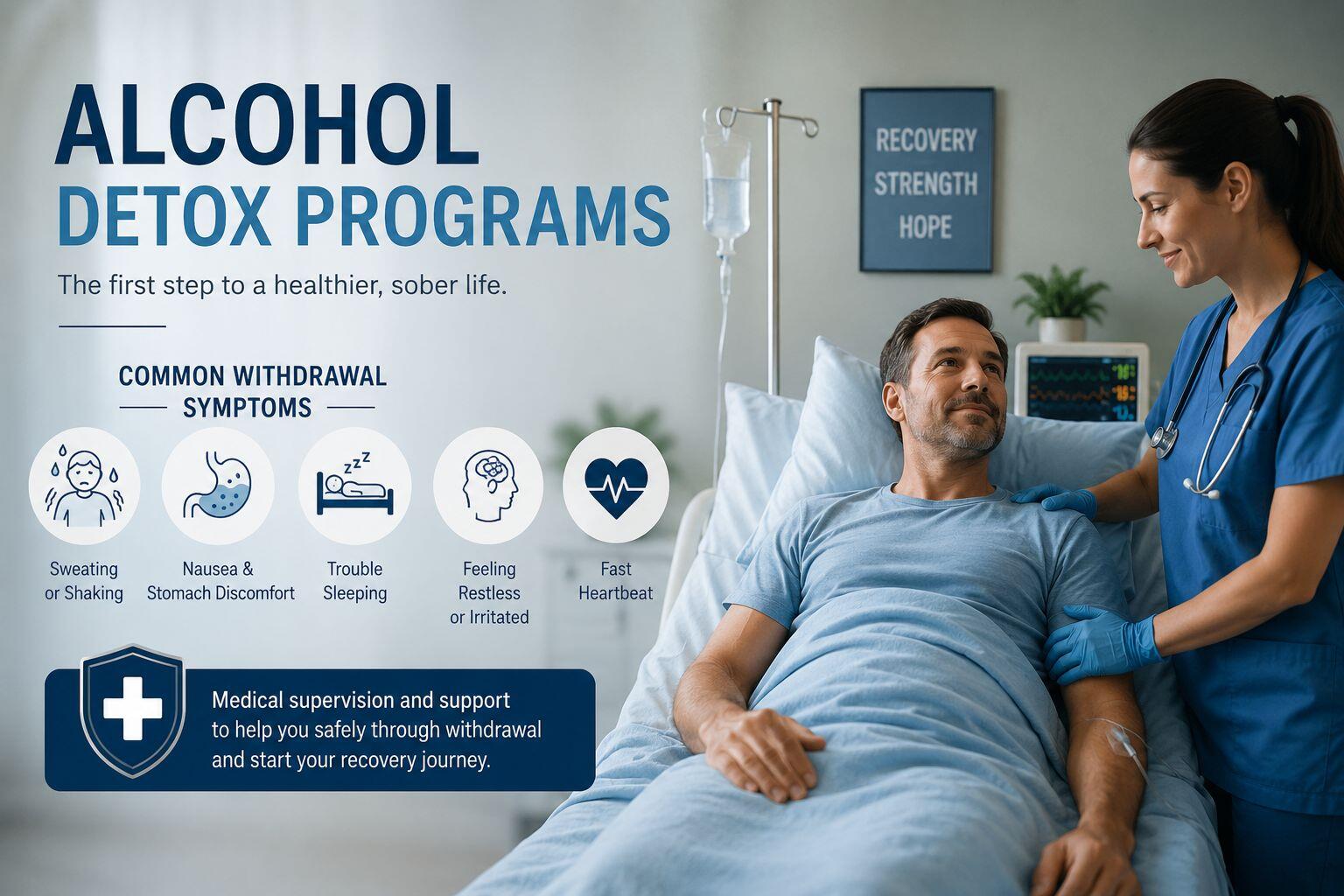
For people who have been drinking heavily for a long time, detox is often the first stage before therapy or rehab begins. This is the period when alcohol leaves the body and withdrawal symptoms start showing up. The first few days can feel physically exhausting for some individuals, especially if alcohol use has been happening daily.
Common alcohol withdrawal symptoms can include:
- Sweating or shaking
- Nausea and stomach discomfort
- Trouble sleeping
- Feeling restless or irritated
- Fast heartbeat
Some people may also experience more serious withdrawal reactions, including confusion or seizures. Because of this, many individuals choose a California detox center where medical staff can monitor symptoms, provide medications if needed, and help keep the body stable during withdrawal.
Residential Treatment Programs
Residential treatment means staying at the rehab center full-time while focusing on recovery. People in these programs usually spend their days attending therapy, group sessions, recovery meetings, and wellness activities while remaining away from outside distractions.
Many people entering alcohol rehab say the biggest benefit is having a break from the routines and environments connected to drinking. Residential care can also help people who feel they need more structure during the first stage of recovery.
Programs may include:
- One-on-one counseling
- Group therapy sessions
- Daily schedules and recovery activities
- Medical support when needed
- Planning for long-term recovery
This type of care is often chosen by people who need extra support before returning to everyday responsibilities.
Outpatient Programs
Outpatient treatment allows people to continue recovery while still living at home or in sober housing. Instead of staying overnight, they attend scheduled therapy sessions during the week and return home afterward.
Outpatient care may fit people who:
- Need more flexibility with work or family responsibilities
- Have a stable home environment
- Are stepping down from inpatient alcohol rehab
- Do not require 24-hour medical monitoring
For some individuals, outpatient care becomes the next step after detox or residential treatment as recovery continues over time.
Which Alcohol Treatment Program May Fit Different Recovery Needs?
| Program Type | Main Purpose | Level of Care | Living Arrangement |
|---|---|---|---|
| Detox | Withdrawal stabilization | High | Residential |
| Residential Rehab | Intensive recovery support | High | Residential |
| PHP | Daytime structured treatment | Moderate | Home or sober living |
| IOP | Flexible therapy support | Moderate to low | Home |
Not everyone enters recovery at the same stage. Some people need medical help during withdrawal, while others are ready for therapy and relapse prevention after detox. This is why treatment programs can look very different from one person to another.
What Is Alcohol Detox Like?
For many people, detox is the hardest part physically. Once alcohol use stops, the body has to adjust without it, and that adjustment period can feel rough during the first few days.
Some people begin feeling symptoms the same day they stop drinking. Other people may have symptoms later, depending on the amount and frequency of alcohol use.
Medical teams can monitor the following during alcohol detox:
- Blood pressure and pulse
- Sleep patterns
- Hydration and nutrition
- Changes in withdrawal symptoms
- Reaction to medicines (when given)
In some cases, alcohol withdrawal can be severe, particularly for those who drink heavily for an extended period. Due to this, many individuals tend to feel safer beginning recovering with medical assistance near to them.
Is Inpatient Alcohol Rehab Better Than Outpatient Care?
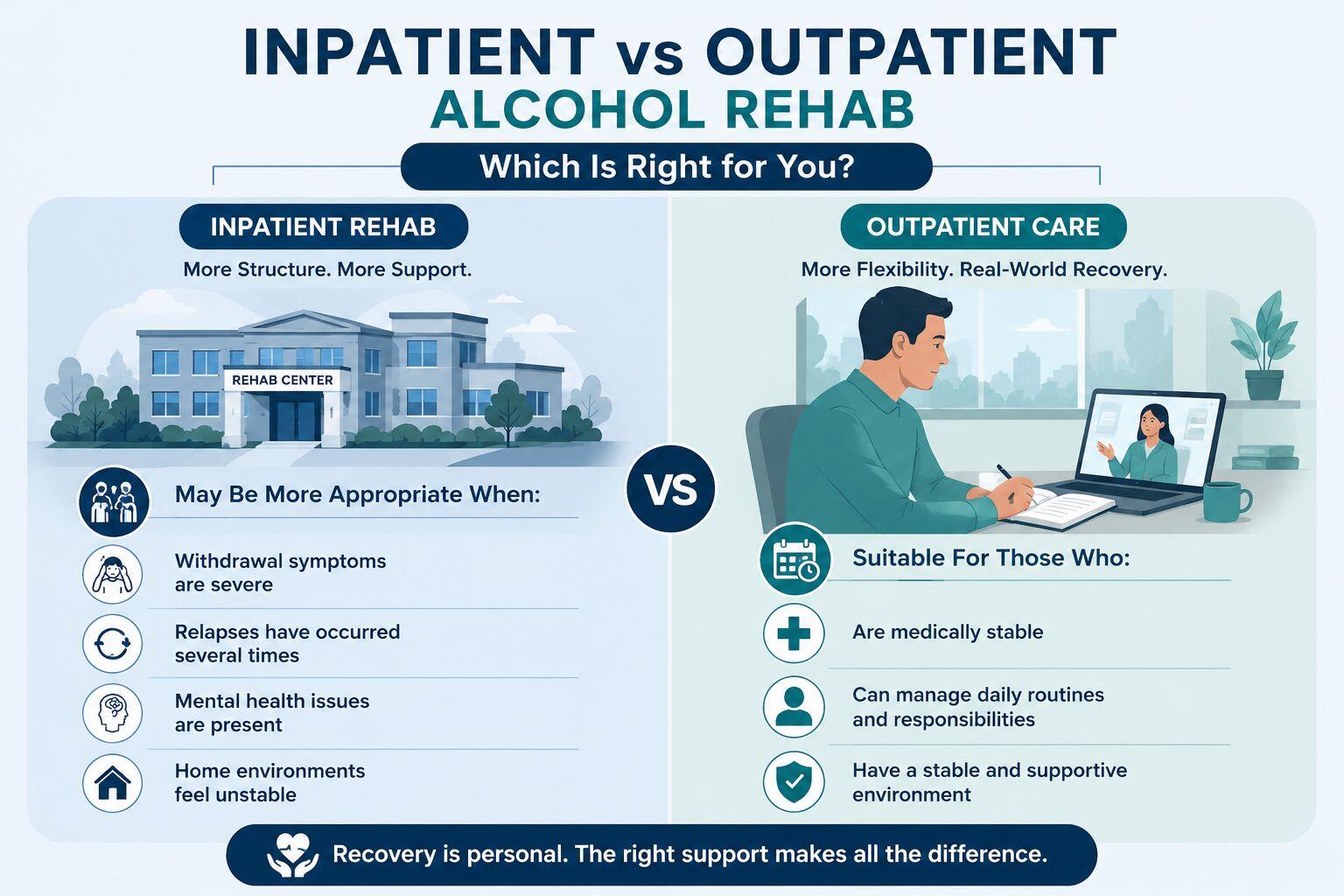
There is not a single solution that works for all. Others need more structure and medical support, others can recover successfully with outpatient programs.
An inpatient alcohol rehab program may be more appropriate when:
- Withdrawal symptoms are severe
- Relapses have occurred several times
- Mental health issues are present
- Home environments feel unstable
Outpatient programs are suitable for those who are medically stable and able to manage their daily routines while undergoing treatment.
What Factors Should You Consider Before Choosing a Program?
When you’re faced with a choice among multiple treatment programs, it can be tough to choose. Rather than just consider the location or cost, it is better to consider how much support can be provided and whether that level of support is appropriate for a particular situation.
Some of the things that people take into account include:
- Drinking amount and frequency
- Medical withdrawal risks
- Needs for mental health
- Program structure and schedule
- Insurance coverage
- Distance from home and daily triggers
After a professional evaluation and a medical assessment, it is often clearer what level of care is needed.
Why Structured Treatment Can Help During Recovery
Recovery can often be more difficult if the person attempts to do everything on his or her own. Many people stay engaged in treatment through structured programs, which establish routines.
The aim of this is to minimise distractions through daily schedules, therapy sessions, medical care and recovery planning. Many also find peer support and regular counseling to be helpful as they cope physically and emotionally.
Recovery is unique for each person, but with stable support, an individual can stay focused when the going gets tough during treatment.
Finding the Right Alcohol Recovery Program in California
For some, detox can be the first step in the treatment and then they enter the residential or outpatient program. Some individuals might just need brief stabilization and counseling assistance. Programs for recovery are also tailored to individual history, medical requirements and recovery objectives.
When people are considering treatments in California, it can be helpful to understand the differences between the programs, so that they don’t feel overwhelmed by the process.
Start Exploring Alcohol Recovery Options That Fit Your Needs
Recovery can begin with understanding what kind of support feels safest and most realistic for your situation. Pacific View Detox offers detox, residential treatment and ongoing recovery services to help people stabilize and recover.
Conclusion
Alcohol recovery programs may vary greatly according to the extent of care a person requires. Detox, residential treatment and outpatient support are all distinct approaches to recovery, and it is important to understand the differences to better equip people with the confidence to choose the right treatment.
At Pacific View Detox, individuals can learn more about available recovery options, medical support services, and structured treatment programs designed to help people move through recovery with greater stability and support.
Taking the first step toward treatment may feel difficult at first, but learning what options are available today can help create a safer and more supported path forward. By contacting Pacific View Detox, you can learn more about what is offered, and which care level is best for you. The right treatment program can help turn uncertainty into progress and create a stronger foundation for long-term healing and stability.
FAQs
What is the difference between alcohol detox and rehab?
Detoxification is a process that stabilizes withdrawal symptoms, whereas, rehab is a process that involves therapy and recovery support and the planning of long-term treatment.
What is the average length of alcohol detox?
The average stay in a detox program is a few days, with the length of stay determined by withdrawal symptoms and medical requirements.
Can alcohol withdrawal become dangerous?
Yes. Without treatment, severe withdrawal can cause seizures, confusion or other medical issues.
Is residential rehab or outpatient rehab better?
This will depend on the person’s recovery history, medical condition and the amount of support required.
What happens once residential treatment is over?
Many people keep going through their recovery outpatient, use therapy, join a support group or stay in a sober living home.