The Alcohol Withdrawal Timeline: What to Expect Every Single Day
Objective
Help patients and families in Southern California understand the alcohol withdrawal timeline day by day, recognize when symptoms become dangerous, and take the right steps toward medically supervised detox at Pacific View Detox in Dana Point, California.
Key Takeaways
- The alcohol withdrawal timeline begins as early as 6 hours after the last drink for daily heavy drinkers
- Symptoms follow a predictable pattern across days but vary in severity based on how long and how heavily someone has been drinking
- The most dangerous window is between 24 and 72 hours, when the risk of seizures and delirium tremens is highest
- How long alcohol withdrawal lasts depends on individual factors including duration of use, overall health, and whether prior withdrawals have occurred
- Quitting alcohol alone at home after heavy daily use is medically dangerous, not just uncomfortable
- Pacific View Detox in Dana Point, California provides medically supervised alcohol detox with 24-hour clinical monitoring.
Most people who have been drinking heavily every day have some idea that stopping will not be easy. What most of them underestimate is the medical risk involved. Alcohol withdrawal is not the same as a bad hangover stretched across several days. It is a neurological event, and for a significant number of people it becomes a medical emergency.
The body adapts to the constant presence of alcohol by suppressing its own calming mechanisms. When alcohol is removed, those suppressed systems overcorrect. The brain and central nervous system shift into a state of hyperactivity that drives every symptom on the withdrawal timeline, from the early anxiety and shaking to the more serious risks of seizures and delirium tremens.
Knowing what happens and when does not make withdrawal safe to manage alone. It does help people recognize how serious their situation is and make a more informed decision about getting proper clinical support. If someone close to you is considering stopping alcohol after heavy daily use, call Pacific View Detox at 888-599-8382 before they try to do it without help. Our team provides alcohol treatment in California with medical supervision from day one.
Why the Alcohol Withdrawal Timeline Matters
Understanding the alcohol withdrawal timeline matters because symptoms do not all arrive at once. They unfold in stages over days, and the severity of each stage is not always predictable from the outside.
Someone might feel relatively okay in the first six hours and develop a seizure by hour thirty. A family member might see a person shaking and assume it is nerves, not recognizing it as a withdrawal symptom that needs clinical attention. Knowing what the timeline looks like helps both patients and families respond correctly rather than waiting too long.
The timeline also helps explain why so many people who try to quit alone relapse before symptoms peak. The discomfort hits fast, the relief of having a drink is immediate, and without clinical support in place, the path of least resistance wins. Medical detox interrupts that cycle by managing symptoms directly so the person can get through the acute phase safely.
Alcohol Withdrawal Day by Day: Hours 6 Through 24
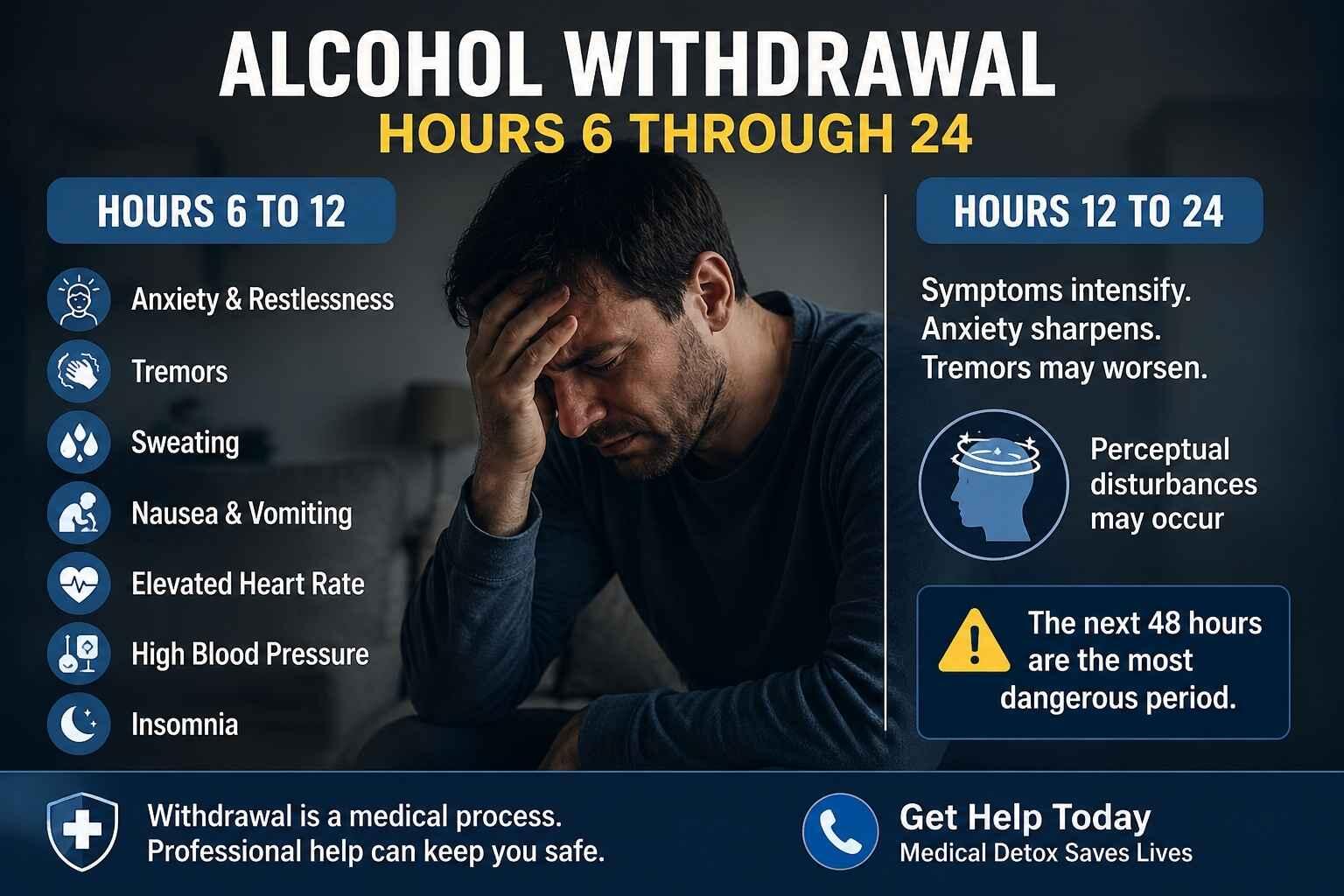
For someone who has been drinking heavily every day, the first symptoms of withdrawal typically appear within 6 to 12 hours of the last drink. This is not a hangover. The body has already started compensating for the absence of alcohol before the person even feels sober.
Hours 6 to 12:
- Anxiety and restlessness that feels physical, not just mental
- Tremors in the hands, sometimes extending to the arms
- Sweating, often significant and unrelated to physical exertion
- Nausea and possible vomiting
- Elevated heart rate and blood pressure
- Headache that does not respond to standard pain relief
- Insomnia, even when exhausted
These early symptoms are uncomfortable but represent the beginning of a process that gets significantly more intense before it improves. Many people mistake this stage for a manageable rough patch. It is the warning phase, not the peak.
Hours 12 to 24:
Symptoms intensify. The anxiety sharpens. Tremors may worsen. Some people develop perceptual disturbances, including visual or auditory experiences that feel disorienting. These are distinct from full hallucinations but signal that the nervous system is under significant stress.
The alcohol withdrawal symptoms timeline is already accelerating at this point, and for anyone without clinical support, the next 48 hours become the most dangerous period of the entire process.
Day 2 and Day 3: The Most Dangerous Window
This is the phase that makes unsupervised alcohol withdrawal medically irresponsible for anyone with a history of heavy daily drinking. Days 2 and 3 are when the most serious complications of alcohol withdrawal occur.
Seizures
Alcohol withdrawal seizures most commonly occur between 24 and 72 hours after the last drink. They can happen with no warning. A person who has been managing symptoms at home and feels like they are getting through it can have a grand mal seizure without any preceding sign.
Seizures are more likely in people who have been through withdrawal before, those who have used alcohol heavily for many years, and those who are also withdrawing from other substances. Each prior withdrawal episode increases neurological sensitivity, making the next one more dangerous. This is the kindling effect, and it is a clinical reason why repeat attempts at quitting alone carry compounding risk.
Delirium Tremens
Delirium tremens, commonly called DTs, is the most severe complication of alcohol withdrawal and typically develops between 48 and 72 hours after the last drink. It does not occur in every person going through withdrawal, but when it does, it requires immediate emergency medical care.
Symptoms of delirium tremens include:
- Severe confusion and disorientation
- Agitation that can become extreme
- Fever and profuse sweating
- Rapid heart rate
- Full hallucinations, both visual and auditory
- Tremors severe enough to affect the entire body
Without medical treatment, delirium tremens carries a mortality rate that has historically reached as high as 37 percent in untreated cases. With proper medical management, that rate drops significantly. This is not a condition to manage at home.
Start Alcohol Detox Safely With Medical Supervision Today
Alcohol withdrawal can become dangerous fast. Speak confidentially with our team and learn your detox options before symptoms worsen.
Days 4 Through 7: When Acute Symptoms Begin to Ease
For most people who make it through the 72-hour window without a serious complication, the intensity of acute withdrawal begins to decrease around day 4. That does not mean they feel well. It means the highest-risk phase has passed.
Common symptoms through days 4 to 7 include:
- Ongoing anxiety, though typically less acute than earlier days
- Disrupted sleep, including vivid dreams and difficulty staying asleep
- Continued sweating and temperature instability
- Mood swings and emotional volatility
- Fatigue and general physical weakness
- Reduced appetite and digestive discomfort
For people in a medically supervised setting, this phase is managed with supportive medications, hydration, nutritional support, and clinical monitoring. For people trying to manage alone, this stretch is where many give up and return to drinking, not because they lack motivation but because the symptom burden without support is simply too high.
The Alcohol Withdrawal Symptoms Timeline Beyond One Week
For many people, especially those with a long history of heavy alcohol use, withdrawal does not fully resolve at the end of week one. A subset of people experience what is called post-acute withdrawal syndrome (PAWS), where a range of symptoms persist for weeks or months after the acute phase ends.
PAWS symptoms include:
- Persistent anxiety and mood instability
- Sleep disruption that can last weeks
- Cognitive fog and difficulty concentrating
- Irritability and emotional sensitivity
- Low energy and reduced motivation
These are not signs that detox did not work. They reflect the time the nervous system needs to fully recalibrate after years of alcohol dependence. They are also one of the primary drivers of relapse in people who leave treatment without continued support. Understanding that this phase exists and has a clinical explanation helps people stay the course rather than interpreting ongoing symptoms as permanent.
Stages of Alcohol Withdrawal: A Clinical Overview
Clinicians typically organize alcohol withdrawal into three stages based on symptom severity. Understanding the stages of alcohol withdrawal helps explain why some people have a much harder course than others.
| Stage | Timeframe | Key Symptoms |
|---|---|---|
| Stage 1 (Mild) | Hours 6 to 12 | Anxiety, tremors, sweating, nausea, elevated heart rate |
| Stage 2 (Moderate) | Hours 12 to 48 | Intensified Stage 1 symptoms, perceptual disturbances, rising blood pressure |
| Stage 3 (Severe) | Hours 24 to 72 | Seizures, delirium tremens, fever, hallucinations, extreme agitation |
Not everyone progresses through all three stages. Factors that increase the likelihood of reaching Stage 3 include duration and volume of alcohol use, prior withdrawal history, age, and overall physical health. A person who has gone through three or four prior detox cycles is significantly more likely to develop severe complications than someone withdrawing for the first time.
How Long Does Alcohol Withdrawal Last?
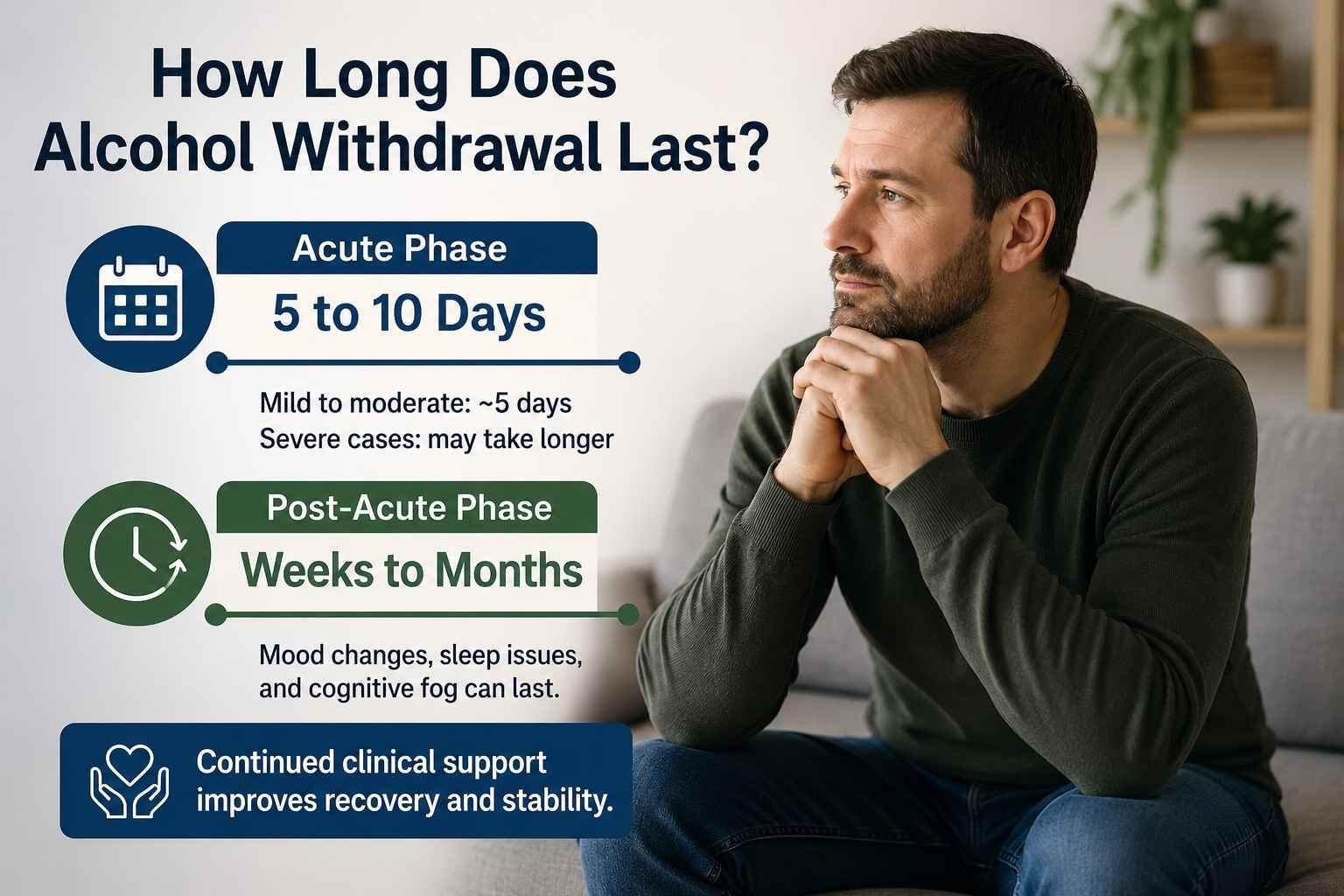
How long alcohol withdrawal lasts depends on several factors that vary from person to person.
For most people, the acute phase runs from 5 to 10 days. Mild to moderate cases tend to resolve closer to the 5-day end. Severe cases, particularly those involving delirium tremens, may require longer medical management. People with a longer history of heavy daily drinking and those who have experienced prior withdrawals typically face a longer and more intense acute period.
The post-acute phase is harder to put a definitive timeline on. Some people feel essentially normal within a few weeks. Others manage mood instability, sleep issues, and cognitive fog for several months. Continued clinical support through this period, whether through residential treatment, intensive outpatient, or ongoing therapy, makes a measurable difference in how well and how quickly a person stabilizes.
Why Quitting Alone Is Dangerous and What to Do Instead
The combination of seizure risk, delirium tremens, and the symptom burden that makes staying sober through acute withdrawal nearly impossible without help makes a clear case for medically supervised detox as the standard of care for alcohol withdrawal.
This is not about whether someone is strong enough to handle it. It is about physiology. The dangers of alcohol withdrawal symptoms when quitting alone are real regardless of how motivated or determined a person is. Clinical monitoring is what makes the difference between a withdrawal that is managed safely and one that becomes an emergency.
At Pacific View Detox in Dana Point, the medical detox program provides:
- 24-hour clinical monitoring throughout the acute withdrawal window
- Medication-assisted management of withdrawal symptoms including benzodiazepines to reduce seizure risk
- Nutritional support and hydration management
- Psychiatric monitoring for mood and perceptual disturbances
- A structured, calm environment that removes access to alcohol during the most vulnerable days
Pacific View Detox is part of Maven Recovery Centers, which means patients have access to a full continuum of care after detox. Moving from detox directly into a residential or outpatient treatment program is consistently associated with better long-term outcomes than detox alone.
Most major insurance plans cover medical detox for alcohol dependence. You can verify your insurance benefits or call the admissions team at 888-599-8382 to confirm coverage before making any decisions.
Medical Note: This article is for informational purposes only and does not constitute medical advice. Alcohol withdrawal can become a life-threatening medical emergency without clinical management. Do not attempt to stop drinking after heavy daily use without first consulting a licensed physician or medical team. If someone is experiencing seizures, severe confusion, high fever, or hallucinations during alcohol withdrawal, call 911 immediately. For medically supervised alcohol detox in California, contact Pacific View Detox at 888-599-8382.
Frequently Asked Questions
When do alcohol withdrawal symptoms start after the last drink?
For people who have been drinking heavily every day, symptoms typically begin within 6 to 12 hours of the last drink. Early signs include anxiety, tremors, sweating, and nausea. The timeline accelerates from there, with the most dangerous symptoms appearing between 24 and 72 hours. Anyone who has been drinking heavily for an extended period should not wait to see how bad it gets before seeking medical support.
How long does alcohol withdrawal last from start to finish?
The acute phase runs roughly 5 to 10 days for most people. Severe cases, particularly those involving delirium tremens, may require medical management for longer. Post-acute withdrawal syndrome can extend symptoms including anxiety, sleep disruption, and cognitive fog for several weeks to months in people with a long history of heavy use. Clinical support through both phases significantly improves outcomes.
Can you have a seizure from stopping alcohol?
Yes. Alcohol withdrawal seizures are a documented and serious complication that occur most often between 24 and 72 hours after the last drink. They can happen without warning and in people who have never had a seizure before. The risk is higher in people with a prior withdrawal history and those who used alcohol heavily for many years. This is one of the core reasons medical supervision during detox is not optional for heavy drinkers.
What is delirium tremens and who is at risk?
Delirium tremens is the most severe form of alcohol withdrawal, involving confusion, hallucinations, fever, extreme agitation, and rapid heart rate. It typically appears between 48 and 72 hours after the last drink. Not everyone develops DTs, but people with a long history of heavy daily drinking, multiple prior withdrawals, and poor general health are at higher risk. Without medical treatment, DTs can be fatal.
Does insurance cover alcohol detox in California?
Most major insurance plans cover medically supervised alcohol detox as a clinical necessity. Pacific View Detox works with most major insurance providers. The simplest way to confirm what your plan covers is to verify your insurance online or call 888-599-8382 to speak with the admissions team before making any commitments.
Is medical detox required for alcohol withdrawal, or can I manage it at home?
For anyone with a history of heavy daily drinking, medical detox is the standard of care, not an optional upgrade. Home management of alcohol withdrawal carries a real risk of seizures and delirium tremens, both of which require emergency medical care. The medications used during supervised detox to prevent these complications are not available without clinical prescription and monitoring. Attempting to manage it alone saves neither time nor difficulty, and significantly increases medical risk.
What happens after alcohol detox at Pacific View Detox?
Detox is the first step, not the whole picture. After the acute withdrawal phase is managed, most patients benefit from transitioning into a structured treatment program to address the behavioral, emotional, and psychological aspects of alcohol dependence. Pacific View Detox is part of Maven Recovery Centers, which provides access to continued care after detox for patients who need it.
Conclusion
Alcohol withdrawal is a medical process, not a test of character. The timeline is predictable enough that clinicians can anticipate what is coming and intervene before it becomes dangerous. That is exactly what supervised detox provides.
Pacific View Detox in Dana Point, California offers medically supervised alcohol detox with individualized care plans and 24-hour clinical monitoring. The team manages the withdrawal process from the first day through the acute phase and helps patients transition into continued treatment when they are ready.
Call 888-599-8382 or contact us online to speak with someone today. You can also start the admissions process at any time. The first conversation is confidential.