Can An Anxiety Attack Make You Pass Out During Withdrawal?
Yes, an anxiety attack during withdrawal can make you feel like you are going to pass out, and in some cases actual fainting can occur. However, true loss of consciousness is more likely when anxiety combines with dehydration, low blood pressure, low blood sugar, or a high-risk withdrawal type (alcohol or benzodiazepines). Most people experience intense dizziness and near-fainting sensations rather than fully losing consciousness. If you actually faint, experience seizures, or have confusion that worsens, seek medical supervision immediately.
If you are going through withdrawal and suddenly feel dizzy, shaky, or like you might collapse, that fear is completely real. Many people describe the same frightening combination: racing heartbeat, tight chest, and the thought, “Am I about to pass out?” You are not weak, and you are not alone. These symptoms are extremely common during detox — and understanding exactly what is happening in your body can take away much of the terror.
This comprehensive guide explains the science behind anxiety attacks during withdrawal, why they trigger near-fainting sensations, which withdrawal types carry the highest medical risk, and what you should do if red-flag symptoms appear. Whether you are researching for yourself or a loved one, the information here is written to be medically accurate, easy to follow, and genuinely useful.
Key Takeaways
- An anxiety attack during withdrawal can make you feel like you will pass out, even if you do not faint.
- Real fainting can happen, but it is more likely when dehydration, low blood pressure, low blood sugar, or risky withdrawal types are involved.
- Withdrawal can increase anxiety because your nervous system is “on high alert.”
- Unmanaged anxiety can worsen withdrawal symptoms by messing with breathing, sleep, and hydration.Some symptoms should always be treated as urgent and need medical supervision.
Why Does Withdrawal Trigger an Anxiety Attack?
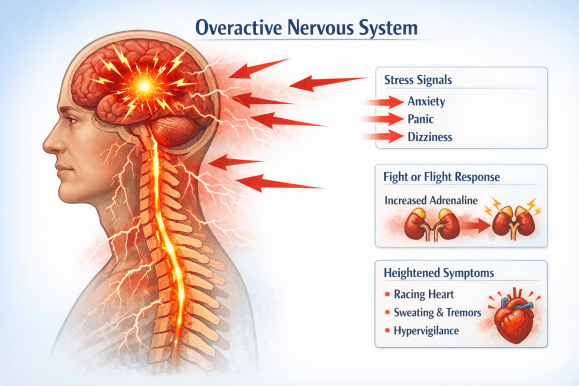
When a substance — whether alcohol, benzodiazepines, opioids, or stimulants — is regularly used, your brain adapts to its presence. The nervous system recalibrates itself around the drug, either by suppressing or amplifying certain chemical pathways to maintain balance. When the substance is suddenly removed, that delicate balance is disrupted and the nervous system swings sharply in the opposite direction.
In practical terms, this means your nervous system becomes hyperactive. It fires signals at a faster rate than usual, which produces a cluster of physical and psychological symptoms. This overactivation is directly responsible for many of the most distressing withdrawal experiences:
- Faster heart rate and palpitations
- Excessive sweating, even in cool environments
- Uncontrolled shaking or tremors
- Nausea, stomach cramps, and vomiting
- Severe difficulty sleeping and vivid nightmares
- Overwhelming, sudden waves of fear
- Heightened sensitivity to light, sound, and touch
When these physical sensations hit, your brain does what brains are designed to do: it tries to interpret them. A racing heart, in ordinary life, signals danger. Your brain reads the withdrawal symptom as a threat and launches a panic response on top of it. The panic makes the heart race even faster. The faster heart rate reinforces the sense of danger. A feedback loop develops — and this is why an anxiety attack during withdrawal can feel so catastrophically intense.
Can an Anxiety Attack Make You Pass Out During Withdrawal? The Full Answer
The short answer is yes — it is possible. The fuller answer requires understanding two distinct experiences that people often conflate.
Part 1: The Feeling of Nearly Passing Out
This is extremely common during an anxiety attack combined with withdrawal. Dizziness, lightheadedness, visual disturbances (“tunneling”), weak legs, and a sense of unreality can all occur without any actual loss of consciousness. These sensations are real and frightening, but they do not necessarily indicate a life-threatening event. In most cases, they are driven by changes in breathing patterns and blood chemistry triggered by panic.
Part 2: Actual Loss of Consciousness (Syncope)
True fainting — medically known as syncope — does occur during withdrawal, but it typically requires an additional contributing factor. Anxiety alone is rarely sufficient. The following factors significantly raise the risk:
| Contributing Factor | Why It Raises Fainting Risk | Common In |
|---|---|---|
| Dehydration | Reduces blood volume, lowering pressure to the brain | All withdrawal types |
| Low blood pressure (orthostatic hypotension) | Blood pools in legs when standing; brain briefly deprived of oxygen | Alcohol, opioid withdrawal |
| Low blood sugar (hypoglycemia) | Poor appetite and sweating can lower glucose, triggering panic-like symptoms | All withdrawal types |
| Hyperventilation (fast, shallow breathing) | Lowers CO₂ levels, causing dizziness, tingling, and near-fainting | Anxiety attacks |
| Alcohol/benzodiazepine withdrawal complications | Seizures and cardiovascular instability can directly cause fainting | Alcohol, benzodiazepine withdrawal |
What Does ‘Almost Passing Out’ Actually Mean? 5 Common Causes
When someone says they nearly passed out during withdrawal, they typically experienced one or more of the following specific physiological events. Understanding each one can help you recognize what your body is doing — and respond more calmly.
1. Hyperventilation (Breathing Too Fast)
During an anxiety attack, breathing becomes rapid and shallow. This changes the ratio of oxygen and carbon dioxide in the bloodstream. Critically, it is not lack of oxygen but the drop in CO₂ that causes symptoms. Low CO₂ causes blood vessels in the brain to constrict, reducing blood flow. The result is lightheadedness, tingling in the hands and face, chest tightness, and a profound sense of unreality or detachment. This can feel terrifying but is rarely life-threatening in isolation.
2. Orthostatic Hypotension (Standing Up Too Quickly)
Withdrawal affects the autonomic nervous system, which regulates blood pressure. When you stand up quickly, gravity pulls blood toward your legs. Normally the body compensates within a second or two. During withdrawal, this reflex is impaired, and blood pressure drops briefly before recovering. That momentary drop can cause a “blackout feeling,” visual graying, or unsteadiness.
3. Dehydration
Withdrawal commonly causes sweating, vomiting, diarrhea, and dramatically reduced appetite. The result is often significant dehydration. Reduced blood volume means lower blood pressure, less efficient oxygen delivery to the brain, and a much lower threshold for dizziness. Dehydration can also cause a rapid heart rate that intensifies anxiety sensations.
4. Low Blood Sugar (Hypoglycemia)
Eating is often very difficult during withdrawal. Without adequate glucose, the brain — which relies almost exclusively on glucose for fuel — begins to signal distress. Shakiness, sweating, weakness, heart palpitations, and intense anxiety can all be driven by low blood sugar. These symptoms are physically indistinguishable from a panic attack, making the experience more confusing and frightening.
5. High-Risk Withdrawal Types
Alcohol withdrawal and benzodiazepine withdrawal are neurologically dangerous because both substances powerfully suppress the GABA neurotransmitter system. When they are removed, the nervous system can become so overexcited that it produces seizures, delirium tremens (in alcohol withdrawal), or life-threatening cardiovascular instability. These conditions can directly cause loss of consciousness and require immediate medical supervision.
Dizziness vs. Red Flags: A Complete Symptom Reference
When a substance — whether alcohol, benzodiazepines, opioids, or stimulants — is regularly used, your brain adapts to its presence. The nervous system recalibrates itself around the drug, either by suppressing or amplifying certain chemical pathways to maintain balance. When the substance is suddenly removed, that delicate balance is disrupted and the nervous system swings sharply in the opposite direction.
In practical terms, this means your nervous system becomes hyperactive. It fires signals at a faster rate than usual, which produces a cluster of physical and psychological symptoms. This overactivation is directly responsible for many of the most distressing withdrawal experiences:
- Faster heart rate and palpitations
- Excessive sweating, even in cool environments
- Uncontrolled shaking or tremors
- Nausea, stomach cramps, and vomiting
- Severe difficulty sleeping and vivid nightmares
- Overwhelming, sudden waves of fear
- Heightened sensitivity to light, sound, and touch
When these physical sensations hit, your brain does what brains are designed to do: it tries to interpret them. A racing heart, in ordinary life, signals danger. Your brain reads the withdrawal symptom as a threat and launches a panic response on top of it. The panic makes the heart race even faster. The faster heart rate reinforces the sense of danger. A feedback loop develops — and this is why an anxiety attack during withdrawal can feel so catastrophically intense.
| What You Feel | Most Likely Cause | What To Do |
|---|---|---|
| Lightheaded, shaky, fast breathing | Anxiety attack / hyperventilation | Slow breathing (4-2-6 pattern), sit down, sip water |
| Dizzy when standing up | Blood pressure shift / dehydration | Stand slowly, hydrate, consider medical check |
| Tingling in hands or face | Rapid breathing during panic (low CO₂) | Exhale slowly, relax shoulders, ground yourself |
| Heart racing but feel mostly okay | Normal anxiety response, adrenaline | Grounding technique, slow breath, distract |
| Weak legs, visual graying | Orthostatic hypotension | Sit immediately, drink fluids, lie flat if needed |
| Nausea + dizziness together | Dehydration or low blood sugar | Small sips, light snack, rest |
| ⚠️ Actually fainting / blacking out | Possible serious withdrawal complication | Seek medical supervision right away |
| ⚠️ Seizures or muscle jerking | High-risk withdrawal (alcohol/benzo) | Emergency medical care — call 911 |
| ⚠️ Hallucinations (visual/auditory) | Delirium tremens or severe CNS disruption | Emergency medical care — call 911 |
| ⚠️ Chest pain not resolving | Cardiac event or severe withdrawal stress | Emergency medical care — call 911 |
| ⚠️ Confusion worsening over time | Encephalopathy or severe withdrawal | Emergency medical care immediately |
How Anxiety Makes Withdrawal Physically Worse
Anxiety does not just feel unpleasant — it actively disrupts the physical processes your body needs to recover. This is why managing anxiety during detox is not optional; it is a core medical priority.
- Fast, shallow breathing caused by anxiety lowers CO₂ and worsens dizziness, creating a cycle that perpetuates more anxiety.
- Sleep disruption from anxiety prevents the nervous system from recalibrating. Poor sleep makes withdrawal symptoms feel significantly more intense the next day.
- Reduced appetite and fluid intake (driven by anxiety-related nausea) accelerates dehydration and low blood sugar — two of the biggest contributors to fainting risk.
- Sustained muscle tension from chronic anxiety increases pain sensitivity, making physical withdrawal symptoms like body aches and cramps feel worse.
- Catastrophic thinking patterns (“something is terribly wrong with me”) maintain the panic response even when physical symptoms begin to subside.
In short: unmanaged anxiety can push the body incrementally closer to the edge where fainting becomes more likely, even when the initial withdrawal itself would not have caused fainting on its own.
Which Withdrawal Types Carry the Highest Risk of Fainting?
| Substance | Fainting Risk | Medical Supervision Needed? | Special Concerns |
|---|---|---|---|
| Alcohol | HIGH — Can be life-threatening | Strongly recommended | Delirium tremens, seizures, heart instability |
| Benzodiazepines | HIGH — Can be life-threatening | Strongly recommended | Seizures, severe rebound anxiety, psychosis |
| Opioids | MODERATE — Rarely life-threatening | Recommended | Dehydration, heart rate changes, other conditions |
| Stimulants (meth, cocaine) | MODERATE — Cardiac risk | Recommended | Heart arrhythmia, extreme anxiety, psychosis |
| Cannabis | LOW — Generally not dangerous | Helpful but rarely urgent | Anxiety spikes, derealization |
Red-Flag Symptoms That Require Immediate Medical Attention
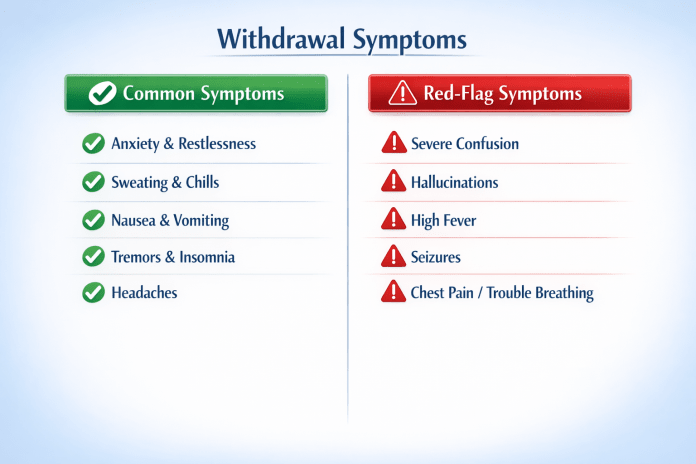
The following symptoms should never be dismissed or “waited out.” Each one can signal a life-threatening complication. Do not hesitate — call 911 or get to an emergency room:
- Actual fainting (complete loss of consciousness), especially if it happens more than once
- Seizures or any uncontrolled muscle jerking or convulsions
- Confusion that gets progressively worse rather than better
- Seeing, hearing, or feeling things that are not there (hallucinations)
- Chest pain that does not go away within a few minutes
- Severe shortness of breath that is not relieved by breathing exercises
- Inability to keep any fluids down for more than an hour
- Signs of severe dehydration: very dark urine, dry mouth, no urination for hours, extreme weakness
- High fever combined with confusion — a possible sign of alcohol-related encephalopathy
Important note on alcohol and benzodiazepine withdrawal: These are the only two major withdrawal syndromes where the withdrawal itself — not just the discomfort — can kill you without medical intervention. If you or someone you know is stopping alcohol or benzodiazepines after heavy, prolonged use, please seek
medically supervised detox. The team at Pacific View Detox specializes in medically monitored detox and can safely manage these high-risk withdrawals with around-the-clock supervision.

What Actually Helps Anxiety During Withdrawal (Evidence-Based Strategies)
These strategies are not a substitute for medical care, but they can significantly reduce the intensity of anxiety symptoms during mild to moderate withdrawal and help prevent the anxiety-dizziness spiral from escalating.
The 4-2-6 Breathing Technique
This specific breathing pattern activates the parasympathetic (rest-and-digest) nervous system and has been shown to reduce panic symptoms:
- Breathe in slowly through the nose for 4 seconds
- Hold briefly for 2 seconds
- Breathe out very slowly through the mouth for 6 seconds
- Repeat this cycle 5–8 times
The longer exhale is the key — it signals the nervous system to deactivate the stress response. Practice this before panic peaks, not only during a crisis.
Small, Frequent Hydration
When nausea is present, large gulps of water often trigger vomiting. Take small sips (1–2 tablespoons every 2–3 minutes). Electrolyte solutions (such as low-sugar sports drinks or oral rehydration salts) are more effective than plain water for restoring blood volume quickly.
Strategic Light Eating
Blood sugar stabilization significantly reduces anxiety and dizziness. Even small amounts of easy-to-digest food help: plain toast, crackers, bananas, rice, broth, or yogurt. Eat small amounts frequently rather than forcing a full meal.
5-4-3-2-1 Grounding Technique
This evidence-backed technique interrupts the dissociation and catastrophic thinking that fuel panic attacks. When you feel yourself spiraling, name out loud:
- 5 things you can see right now
- 4 things you can physically feel (floor under feet, chair, air on skin)
- 3 things you can hear
- 2 things you can smell
- 1 thing you can taste
his pulls cognitive resources away from the panic loop and back into the present moment.
Sensory Environment Management
During withdrawal, the nervous system is in a state of hypersensitivity. Bright lights, loud music, crowded spaces, and loud conversations can all elevate anxiety significantly. A dim, quiet, familiar environment measurably reduces the frequency and intensity of anxiety attacks.
A Supportive Animal Can Also Be Part of an Anxiety Support Plan
For some people, having a supportive animal can provide comfort and companionship during recovery. A pet may help reduce feelings of loneliness, encourage routine, and provide a calming presence when anxiety becomes difficult to manage. For individuals whose mental health conditions may benefit from an emotional support animal or psychiatric service dog, proper documentation can also be an important part of the process. The Supportive Pet helps individuals understand the requirements and obtain ESA and PSD letters when they qualify.
Learn more about ESA and PSD letter services from The Supportive Pet.
Position Changes for Dizziness
If you feel lightheaded, do not stay standing. Sit down immediately with your feet flat on the floor. If symptoms worsen, lie down with your legs slightly elevated (on a pillow) — this helps blood flow back to the brain. Avoid rapid position changes from lying to standing.
Related Resources from Pacific View Detox
If you found this article helpful, these related resources address topics that frequently co-occur with anxiety and withdrawal:
- Understanding Dual Diagnosis in Long-Term Recovery Plans — Anxiety disorders frequently co-occur with addiction; this article explains integrated treatment.
- How Pacific View Detox Enhances Mental Health Services in California — Mental health support during detox and beyond.
- Exploring Mental Health’s Role in Detoxification Success — Why mental health management is inseparable from physical detox.
- How Does Pacific View Detox Address Complex Withdrawals in Dana Point — Complex and high-risk withdrawal management.
- The Difference Between Inpatient and Outpatient Recovery — Choosing the right level of care for your withdrawal severity.
- What Are the Key Factors for a Successful Drug Detox in California — Maximizing safety and comfort in detox.
Did You Know? Quick Facts About Anxiety and Withdrawal
- Most people who describe “almost passing out” during withdrawal never actually lose consciousness — the sensations are driven by breathing changes and are reversible.
- Sleep deprivation makes the brain 60–80% more reactive to perceived threats, dramatically amplifying anxiety responses during withdrawal.
- Dehydration can cause measurable dizziness before thirst sensation even kicks in — by the time you feel thirsty, you may already be meaningfully dehydrated.
- Hyperventilation (breathing too fast) can produce tingling, dizziness, and near-fainting within as little as 60–90 seconds of rapid breathing.
- Skipping meals increases anxiety risk because low blood glucose directly activates the same adrenal stress hormones that produce panic symptoms.
- Alcohol withdrawal produces the most medically dangerous pattern of any commonly abused substance, including opioids — a fact that many people are surprised to learn.
- Benzodiazepine withdrawal can be slower to develop and longer-lasting than alcohol withdrawal, sometimes requiring weeks of medically supervised tapering.
Frequently Asked Questions (FAQs)
Q1. Can an anxiety attack make you pass out during withdrawal?
Yes, it is possible, though most people experience intense near-fainting sensations rather than complete loss of consciousness. True fainting is more likely when anxiety combines with dehydration, low blood pressure, low blood sugar, or a high-risk withdrawal type such as alcohol or benzodiazepines. If you actually faint, treat it as a medical emergency.
Q2. Can anxiety cause you to pass out even without withdrawal?
Anxiety can cause vasovagal syncope (fainting triggered by emotional stress) in some individuals, but this is relatively uncommon. The combination of anxiety and withdrawal — with its physical stressors including dehydration and nervous system overactivation — significantly raises the likelihood compared to anxiety in everyday life.
Q3. What does it feel like when you are about to pass out from anxiety during withdrawal?
Common sensations include sudden lightheadedness, visual graying or tunneling, weakness in the legs, tingling in the hands or face, a sense of unreality, ringing in the ears, and profound weakness. Many people describe feeling “far away” from their own body. These feelings are frightening but are often caused by breathing changes rather than actual oxygen deprivation.
Q4. Can anxiety cause passing out by stopping your breathing?
Anxiety does not stop breathing — rather, it causes the opposite problem: breathing too fast (hyperventilation). This rapid breathing changes the CO₂/oxygen balance in the blood, constricts blood vessels to the brain, and produces dizziness and near-fainting. Slowing and deepening the breath corrects this within a few minutes.
Q5. Can you pass out from a panic attack during alcohol withdrawal specifically?
Yes, and alcohol withdrawal carries particularly high risk. Alcohol withdrawal can cause seizures, severe blood pressure changes, and delirium tremens — all of which can directly cause loss of consciousness. A panic attack layered on top of alcohol withdrawal amplifies cardiovascular stress and dizziness. Alcohol withdrawal always warrants medical supervision.
Q6. How long does an anxiety attack during withdrawal usually last?
The acute peak of a panic attack typically lasts 10 to 30 minutes. However, during withdrawal, residual anxiety and physical discomfort can persist for much longer, and multiple episodes can occur throughout the day. As withdrawal progresses and stabilizes (typically over days to weeks, depending on the substance), anxiety attacks generally decrease in frequency and severity.
Q7. Which withdrawal types need medical supervision the most?
Alcohol and benzodiazepine withdrawal are the highest priority for medical supervision because both can produce life-threatening seizures and cardiovascular complications. Opioid withdrawal is rarely directly life-threatening but can become dangerous through dehydration, and complications are more likely if the person has underlying heart conditions or other health issues. Stimulant withdrawal can involve severe psychiatric symptoms and cardiac risk.
Q8. Can dehydration during withdrawal make an anxiety attack worse?
Yes, significantly. Dehydration reduces blood volume, lowers blood pressure, and increases heart rate — all of which feed directly into anxiety symptoms. It also makes orthostatic hypotension (dizziness on standing) much more likely. Maintaining adequate hydration is one of the most practical and impactful things you can do to reduce anxiety severity during withdrawal.
Q9. Should I go to the ER if I keep nearly passing out during withdrawal?
Yes. Repeated near-fainting episodes indicate that your body is struggling to maintain cardiovascular stability during withdrawal. This warrants medical evaluation to rule out dangerous causes and to get IV fluids, electrolyte support, or medication if needed. A medically monitored detox setting is better than an ER visit if you can arrange it proactively — it provides continuous observation rather than a single assessment.
Q10. What is the safest way to go through withdrawal if I am worried about anxiety and fainting?
A medically monitored detox program, such as the one offered at Pacific View Detox in Dana Point, California, provides continuous vital sign monitoring, IV hydration, anxiety management medications when appropriate, and around-the-clock medical staff. This is the safest and most comfortable way to navigate withdrawal for anyone who has a history of severe anxiety, fainting, or who is withdrawing from alcohol or benzodiazepines.
Conclusion
An anxiety attack during withdrawal can feel terrifying — especially when dizziness and near-fainting sensations make it seem like your body is shutting down. In most cases, these experiences are driven by hyperventilation, blood pressure shifts, dehydration, and low blood sugar rather than by true medical catastrophe. Understanding what is actually happening physiologically can help you respond more calmly and effectively.
That said, certain symptoms should never be dismissed. Actual fainting, seizures, hallucinations, worsening confusion, and chest pain are medical emergencies. And for those withdrawing from alcohol or benzodiazepines especially, medical supervision is not optional — it is essential for survival.
If you or someone you love is facing withdrawal and anxiety, please reach out to a team that understands these symptoms deeply. Pacific View Detox provides medically monitored detox with a compassionate, clinical team experienced in managing both the physical and psychological dimensions of withdrawal. You deserve to feel safe while your body heals.
Trusted External Resources
For additional medically reviewed information on this topic, the following high-authority sources are recommended:
- SAMHSA — Substance Abuse and Mental Health Services Administration (samhsa.gov) — National guidelines on substance use treatment and withdrawal management.
- National Institute on Drug Abuse — NIDA (nida.nih.gov) — Research on withdrawal, addiction, and the neuroscience of substance use.
- MedlinePlus — Withdrawal Symptoms (medlineplus.gov) — Plain-language medical information on withdrawal and anxiety.
- American Addiction Centers — Medical Review (americanaddictioncenters.org) — Clinically reviewed content on withdrawal symptoms and detox.
- Cleveland Clinic — Anxiety Disorders (my.clevelandclinic.org) — Authoritative medical information on anxiety and panic disorders.