Shaking, Sweating, And Anxiety After Quitting Alcohol? Here’s When You Need Medical Alcohol Detox
Objective
This blog explains what alcohol withdrawal can look like after someone stops drinking, why symptoms such as shaking, sweating, and anxiety after stopping drinking should be taken seriously, and when medical detox becomes the safer choice. It also helps readers understand how alcohol detox works, what dangerous withdrawal symptoms look like, and why professional care can protect both health and recovery.
Key Takeaways
- Shaking, sweating, nausea, fast heartbeat, and anxiety after stopping drinking are common early withdrawal symptoms.
- Alcohol withdrawal can get worse quickly in some people, even if the first signs seem mild.
- Severe symptoms can include confusion, hallucinations, seizures, and delirium tremens, which need urgent medical care.
- Medical detox helps doctors closely monitor symptoms and respond if they become dangerous.
- Alcohol detox is often safer for people who drink heavily, have had withdrawal before, or have other health problems.
1. Why Alcohol Withdrawal Happens
When a person drinks heavily for a long time, the brain and body adjust to alcohol being there. Once alcohol is suddenly removed, the body has to work hard to find balance again. That is what causes withdrawal symptoms. The more often and more heavily a person drinks, the more likely withdrawal becomes after they stop.
This is why quitting alcohol can feel very different from one person to another. Some people have mild symptoms. Others become seriously ill. At Pacific View Detox, this matters because many people assume that stopping drinking is only about willpower, when in reality, the body may be going through a real medical event.
2. Early Withdrawal Symptoms After Quitting Alcohol
Early withdrawal symptoms often begin within hours after the last drink. They may start with physical discomfort and emotional distress before becoming more intense. MedlinePlus lists common symptoms such as sweating, shaking, anxiety, headache, nausea, poor sleep, and a fast heart rate.
Common early signs include:
- Shaking or tremors
- Sweating
- Nausea or upset stomach
- Trouble sleeping
- Headache
- Fast heartbeat
- Feeling restless
- Anxiety after stopping drinking
- Irritability or panic
These symptoms may seem manageable at first, but they should not be ignored. Alcohol withdrawal does not always stay at the same level. A person can feel shaky and nervous early on, then become much worse later.
3. Why Anxiety After Stopping Drinking Can Feel So Intense
Many people are surprised by how strong anxiety after stopping drinking can feel. It is not just worry in the usual sense. During withdrawal, the nervous system can become overactive. That can make a person feel panicked, shaky, tense, and unable to relax.
This matters because anxiety can make people want to drink again to make the feeling stop. That is one reason alcohol detox can be hard to do alone. The emotional discomfort can feel overwhelming, especially when it comes with sweating, racing thoughts, poor sleep, and a pounding heart.
In simple terms, intense anxiety during withdrawal is not weakness. It is a sign that the body is struggling to adjust.
4. When Withdrawal Symptoms Become Dangerous
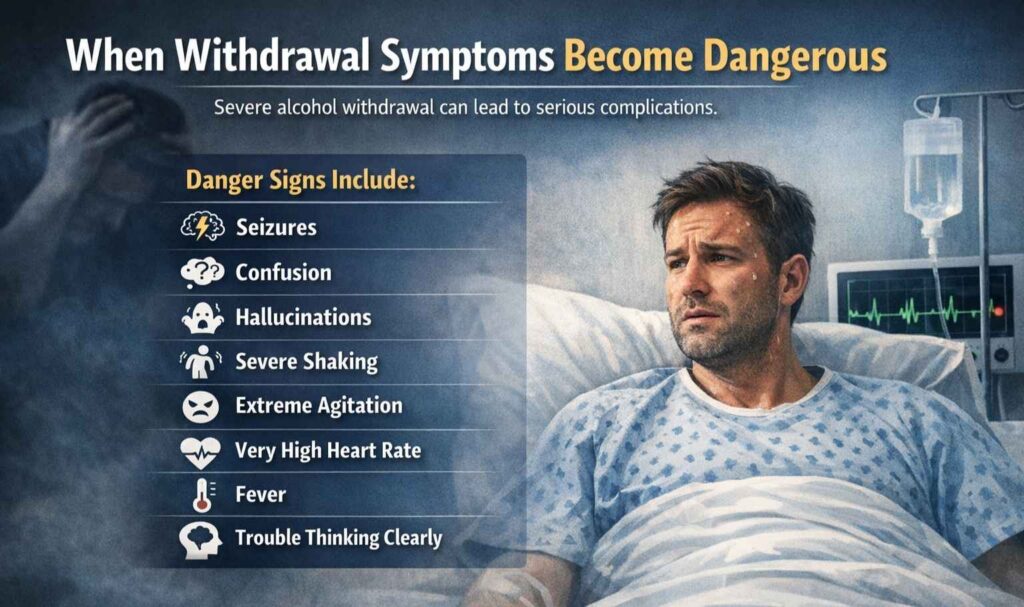
Some alcohol withdrawal symptoms are uncomfortable. Others are dangerous. This is the part people need to understand clearly. Severe alcohol withdrawal can lead to hallucinations, seizures, and delirium tremens. Delirium tremens is a severe form of alcohol withdrawal that involves sudden and serious mental or nervous system changes.
Danger signs include:
- Seizures
- Confusion
- Hallucinations
- Severe shaking
- Extreme agitation
- Very high heart rate
- Fever
- Trouble thinking clearly
If these symptoms appear, urgent medical care is needed. This is when medical detox is not just helpful. It is the safer path. ASAM’s guideline on alcohol withdrawal management makes clear that alcohol withdrawal can range from mild symptoms to severe and life-threatening complications.
5. Who Is More Likely To Need Medical Detox
Not every person who stops drinking will need the same level of care. But some people are more likely to need medical detox than others. Risk is higher for people who drink heavily every day, have had alcohol withdrawal before, have had seizures, or have other major health problems.
A person may need supervised alcohol detox if they:
- Drink heavily and regularly
- Have had serious withdrawal in the past
- Are older or medically fragile
- Use other drugs too
- Have heart, liver, or mental health concerns
- Cannot keep fluids down
- They are already showing strong withdrawal symptoms
This is where professional assessment matters. In the middle of withdrawal, it is not always easy to judge how serious things are. At Pacific View Detox, the safer view is simple: if symptoms are building or feel intense, do not guess.
6. What Happens In Medical Alcohol Detox
Medical detox is a supervised setting where doctors and staff monitor symptoms and help keep the person safe. ASAM explains that alcohol withdrawal management may happen in different settings depending on how severe the symptoms are and how much medical support the person needs.
In medical detox, care may include:
- Regular checks of pulse, blood pressure, and temperature
- Monitoring for worsening withdrawal symptoms
- Medicines to reduce danger and discomfort
- Fluids and nutrition support
- A quieter, safer setting for rest
- Medical response if seizures or confusion appear
The goal is not just comfort. The goal is safety. Some medications may be used during withdrawal to lower seizure risk and calm the nervous system under medical supervision.
7. Why Trying To Detox Alone Can Be Risky
Many people want to stop drinking at home and push through it. That impulse makes sense. But alcohol withdrawal is one of the few substance withdrawals that can become life-threatening. That is why home detox can be risky, especially for heavy or long-term drinkers.
The main danger is unpredictability. A person may only have sweating and anxiety after stopping drinking at first, then develop confusion, hallucinations, or seizures later. Without medical support, there may be no fast way to respond.
This does not mean every person will have the worst outcome. It means the risk is serious enough that professional help matters when symptoms are strong, history is unclear, or heavy drinking has been going on for a long time.
8. What Comes After Alcohol Detox
The first step is detox but not the entire procedure. ASAM states that withdrawal management isn’t a complete treatment for alcohol-related disorders. NIAAA further explains that recovery can comprise behavioral treatment, prescriptions for alcohol dependence and support groups or a combination.
After alcohol detox, people often need:
- Counseling
- Relapse prevention strategies
- In-progress treatment
- Family assistance
- Medical follow-up
- A daily plan to recover
It’s because a lot of people are physically healthier following detox, yet suffer from cravings, habit and stress. They also feel shame or. In the case of Pacific View Detox, the fact is that a safe detox can give you a better beginning, but a long-term recovery requires structure and guidance.
Struggling With Withdrawal Symptoms Right Now?
Experiencing shaking, stress, or discomfort after quitting alcohol? Talk with professionals, understand risks, and find safe support tailored for your situation.
Conclusion
Shaking, sweating, and anxiety after stopping drinking are common alcohol withdrawal signs, but they should never be brushed aside. In some people, these early withdrawal symptoms can turn into seizures, hallucinations, or delirium tremens. That is when medical detox becomes the safest option. Alcohol detox under professional care can help protect the body, reduce risk, and give recovery a more stable beginning. If symptoms are building, feel intense, or you are unsure how serious they are, reach out for professional support rather than trying to manage them alone.
FAQs
How Long After Quitting Alcohol Do Withdrawal Symptoms Start?
Symptoms often begin within hours after the last drink, though timing can vary from person to person.
Is Anxiety After Stopping Drinking Normal?
Yes. Anxiety after stopping drinking is a common alcohol withdrawal symptom and can feel very strong during the early stage.
When Does Alcohol Withdrawal Become Dangerous?
It becomes dangerous when symptoms move beyond mild shaking and sweating and include confusion, hallucinations, seizures, or delirium tremens.
Who Should Consider Medical Detox?
People who drink heavily, have had withdrawal before, or have serious health issues should strongly consider medical detox.
Is Alcohol Detox Enough For Recovery?
Usually no. Detox helps with the physical withdrawal phase, but long-term treatment and support are often needed after that.