Meth Withdrawal Causing Extreme Fatigue And Anxiety? Detox Treatment Can Help
Objective
This blog explains meth withdrawal in simple words. It focuses on the symptoms many people notice first, especially fatigue and anxiety. It also answers common questions like can meth cause anxiety and how long does meth withdrawal last. The goal is to help readers understand what is happening, why it can feel so hard, and how safe detox treatment can help during the early stage of recovery. Many people who contact Pacific View Detox are not looking for perfect words. They want to know why the crash feels so intense and what kind of help makes sense. Methamphetamine is a powerful stimulant, and regular use can lead to methamphetamine use disorder, a type of substance use disorder that affects the brain, mood, sleep, energy, and behavior.
Key Takeaways
- Meth withdrawal often brings heavy fatigue, low mood, strong cravings, and anxiety.
- Yes, can meth cause anxiety is a real question with a real answer. Meth use and withdrawal can both be linked to anxiety and other mental health symptoms.
- How long meth withdrawal lasts depends on the person, but the first few days are often the hardest, and some symptoms can last longer.
- Safe detox treatment can reduce symptoms by monitoring, providing rest, fluids, and food, and offering mental health support.
- Detox is usually the first step, not the whole solution, because substance use disorder often needs ongoing treatment after withdrawal.
What Meth Withdrawal Feels Like
Meth is a stimulant. It pushes the brain and body into a state of high alert. A person may feel more awake, more active, and less hungry while using it. When the drug is stopped, the body often swings in the opposite direction. That is why meth withdrawal can feel like a hard crash. Many people describe it as hitting a wall. They feel drained, foggy, sad, and unable to function normally. SAMHSA’s stimulant treatment guidance explains that stimulant withdrawal can include exhaustion, mood problems, and strong craving, even when the person is no longer high.
Can Meth Cause Anxiety During Withdrawal
Yes. If someone asks, “Can meth cause anxiety, the answer is yes during both use and withdrawal. NIDA notes that methamphetamine can affect mental health and can be linked with anxiety, paranoia, and other emotional problems. When a person stops using, the brain is trying to rebalance. During that period, anxiety can feel stronger, not weaker.
This anxiety may look different from person to person:
- constant worry
- panic-like feelings
- restlessness
- shakiness
- fear without a clear reason
- trouble calming down
For some people, the anxiety is mild. For others, it feels overwhelming. If anxiety comes with paranoia, hallucinations, or thoughts of self-harm, that is not something to ignore.
Common Meth Withdrawal Symptoms
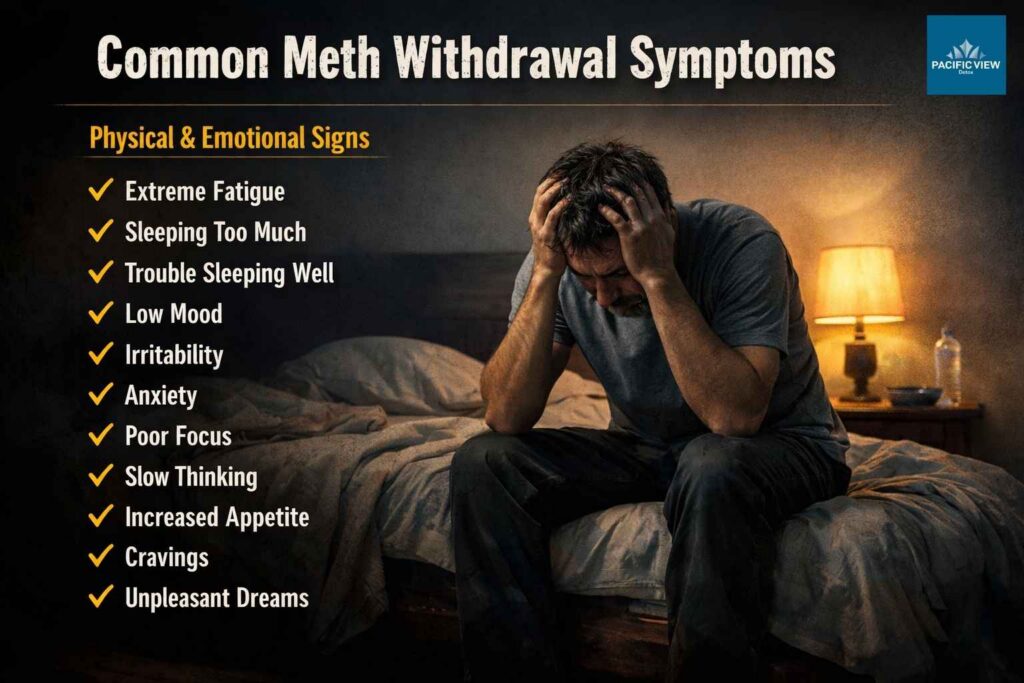
The symptoms of meth withdrawal are often both physical and emotional. They may begin soon after stopping and can feel strongest in the early phase.
Common symptoms include:
- extreme fatigue
- sleeping too much
- trouble sleeping well
- low mood
- irritability
- anxiety
- poor focus
- slow thinking
- increased appetite
- cravings
- unpleasant dreams
NIDA and SAMHSA both describe methamphetamine as an addictive stimulant that can affect energy, mood, sleep, and thinking, which helps explain why withdrawal feels so disruptive.
Some people also face more serious problems, such as:
- severe depression
- suicidal thoughts
- paranoia
- hallucinations
- dehydration
- refusal to eat or drink
These are warning signs indicating the need for urgent evaluation.
How Long Does Meth Withdrawal Last
One of the most searched questions is how long meth withdrawal lasts. There is no exact timeline for everyone. The answer depends on how long the person used meth, how often they used it, whether they used other drugs too, and what their mental and physical health looked like before stopping.
Still, there is a general pattern. The first few days are often the hardest. That is when the crash, the fatigue, and the emotional drop can feel strongest. Some symptoms get better after that, but sleep problems, cravings, low mood, and anxiety can stay around longer. SAMHSA’s guidance on protracted withdrawal explains that some symptoms fade quickly, while others can continue for weeks or more mildly.
So, when people ask how long meth withdrawal lasts, a simple answer is:
- The crash may hit fast
- The first several days can feel very hard
- Some symptoms may improve in one to two weeks
- mood and sleep can take longer to settle
Why Extreme Fatigue Happens
Heavy fatigue is one of the clearest signs of meth withdrawal. This happens because meth has been forcing the body and brain to stay overactive. When that push suddenly stops, the person may feel empty, weak, sleepy, and slow.
This fatigue is not just ordinary tiredness. It can make simple tasks feel hard. Getting out of bed, eating, showering, or holding a conversation may take effort. That is one reason early recovery can feel discouraging. People may think they are failing when, in reality, their body is trying to recover from stress.
When Detox Treatment Becomes Important
Not every person with meth withdrawal needs emergency medical care, but some do need structured detox treatment. Support becomes more important when symptoms are severe or when safety is in question.
Warning signs include:
- suicidal thoughts
- severe depression
- psychosis
- hallucinations
- chest pain
- violent agitation
- inability to eat or drink
- intense panic or paranoia
- use of other substances at the same time
This is where Pacific View Detox or another supervised program may become an important step, because early care is not only about comfort. It is about stability and safety.
How Detox Treatment Reduces Symptoms Safely
Detoxification does not “cure” addiction by itself, but it can reduce symptoms safely and help a person get through the first unstable period. A good detox treatment setting may provide:
- health assessment
- symptom monitoring
- fluids and nutrition
- rest support
- mental health support
- planning for the next stage of care
SAMHSA and NIDA both make it clear that detox works best when it is connected to longer-term treatment, not treated as the full answer.
This matters because the person may look physically calmer after a few days, but cravings, anxiety, and mood problems may still be there.
Meth Withdrawal And Substance Use Disorder
Meth use becomes more serious when it leads to ongoing loss of control, repeated use despite harm, strong cravings, and trouble stopping. That pattern is a substance use disorder. NIDA explains that stimulant addiction is treatable, but it usually needs more than just getting through the first crash.
That is why Pacific View Detox should be seen as a first step, not the whole process. Withdrawal relief helps the person feel safer. Ongoing treatment helps them work on the deeper pattern behind the drug use.
FAQs
Can Meth Cause Anxiety After Stopping?
Yes. Can meth cause anxiety is a common question because many people feel anxious during withdrawal. Meth use and the crash that follows can both affect mood and mental state.
What Are The Main Meth Withdrawal Symptoms?
The most common symptoms include fatigue, cravings, low mood, sleep changes, poor focus, and anxiety.
How Long Does Meth Withdrawal Last?
How long meth withdrawal lasts depends on the person, but the first few days are often the worst, and some symptoms may last for weeks.
Does Detox Treatment Help With Anxiety And Fatigue?
Yes. Safe detox treatment can help reduce symptoms by providing structure, monitoring, and support for food, fluids, rest, and mental health.
Is Detox Enough On Its Own?
Usually no. Detoxification is often the first step. Ongoing treatment is usually needed for substance use disorder.
Take Control Before Symptoms Get Worse
If anxiety, exhaustion, or cravings feel overwhelming, you are not alone. Get safe detox support, real answers, and guidance to start recovery today.
Conclusion
Meth withdrawal can feel crushing. Extreme fatigue, strong anxiety, sleep changes, cravings, and low mood can make a person feel like they are falling apart. Questions like ” Can meth cause anxiety and how long does meth withdrawal last matter because they help people understand that the crash is real and that support can make it safer. Safe detox treatment helps reduce symptoms, protect health, and create a bridge into deeper recovery work. That is why Pacific View Detox and similar programs matter when the symptoms feel too big to manage on your own.
“If meth withdrawal is bringing extreme fatigue and anxiety, getting help early can make the next step safer, calmer, and more possible.”