How Long Does Opioid Withdrawal Last? Timeline and Symptoms
Opioid withdrawal is a process that can feel physically and emotionally intense, especially when someone stops using after regular or long-term use. Many people search for how long opioid withdrawal lasts because the uncertainty around timing can feel stressful when starting recovery. The experience varies from person to person, but there is a general pattern that helps explain what usually happens day by day.
According to the Substance Abuse and Mental Health Services Administration, opioid withdrawal symptoms can begin within hours of the last dose and may vary in intensity depending on the type of opioid and duration of use. This highlights why professional supervision is often recommended, especially during early withdrawal stages when symptoms can peak quickly.
Withdrawal happens because the body has adapted to the presence of opioids over time, and when use is reduced or stopped, it takes time for the system to rebalance. This adjustment period is influenced by several factors, such as health status, dosage history, and type of opioid used.
At Pacific View Detox, individuals often begin recovery with structured medical support that helps them move through withdrawal with closer supervision and care.
Objective
This blog explains how opioid withdrawal develops over time, outlines its day-by-day timeline and symptoms, and helps readers understand why duration varies. It also highlights safe treatment options and the role of medical support in managing withdrawal effectively.
Key Takeaways
- Opioid withdrawal follows a general pattern that includes early symptoms, a peak phase, and gradual improvement over time.
- The timeline varies from person to person depending on opioid type, usage history, and overall health.
- Both physical symptoms, like muscle pain and nausea, and emotional symptoms, like anxiety and insomnia, are common during withdrawal.
- Medical support options such as Suboxone, Methadone, and Clonidine can help reduce discomfort and lower relapse risk.
- Supervised care during detox can improve safety and provide better stability during early recovery stages.
Why Opioid Withdrawal Duration Varies
There is no single timeline that applies to everyone. The length and intensity of withdrawal depend on several factors that influence how the body reacts.
Some of the main factors include:
- Type of opioid used (short-acting vs long-acting)
- Duration of use and dosage levels
- Overall physical health
- Mental health conditions
- Previous withdrawal experiences
Because of these differences, the question about how long opioid withdrawal lasts does not have one fixed answer, but there is a general pattern most people experience.
What Are the Stages of Opioid Withdrawal?
| Timeframe | What Happens |
|---|---|
| 6–12 hours | Early symptoms begin |
| Day 1–3 | Peak withdrawal stage |
| Day 4–7 | Symptoms begin to reduce |
| Week 2+ | Emotional symptoms may continue |
This opioid withdrawal timeline helps set expectations for what the body goes through during the early recovery period.
What Should You Expect in Each Stage of Opioid Withdrawal?
First 6–12 Hours: Early Signs Begin
The first symptoms usually appear shortly after the last dose.
Common signs include:
- Anxiety or restlessness
- Muscle aches
- Yawning and fatigue
- Sweating
At this stage, the body is starting to adjust to the absence of opioids.
Day 1–3: Peak Withdrawal Phase
This is often the most intense period of withdrawal.
The most common opioid withdrawal symptoms include:
- Nausea and vomiting
- Strong cravings
- Chills and sweating
- Rapid heart rate
- Difficulty sleeping
During this phase, physical discomfort is usually at its highest level.
Struggling With Opioid Withdrawal Symptoms?
Get clear answers on opioid withdrawal timeline, symptoms, and treatment. Start safe, guided support today and reduce discomfort with expert care.
Day 4–7: Symptoms Begin to Ease
Physical symptoms slowly start to reduce, although discomfort may still be present.
- Appetite may return
- Energy levels begin to improve slightly
- Nausea becomes less severe
- Sleep may start improving
Even though symptoms reduce, the body is still stabilizing.
Week 2 and Beyond: Emotional Adjustment Phase
At this stage, physical symptoms are mostly reduced, but emotional effects may continue.
- Mood swings
- Low energy
- Anxiety
- Sleep disturbances
This phase is part of post-acute withdrawal and can vary widely between individuals.
Common Opioid Withdrawal Symptoms
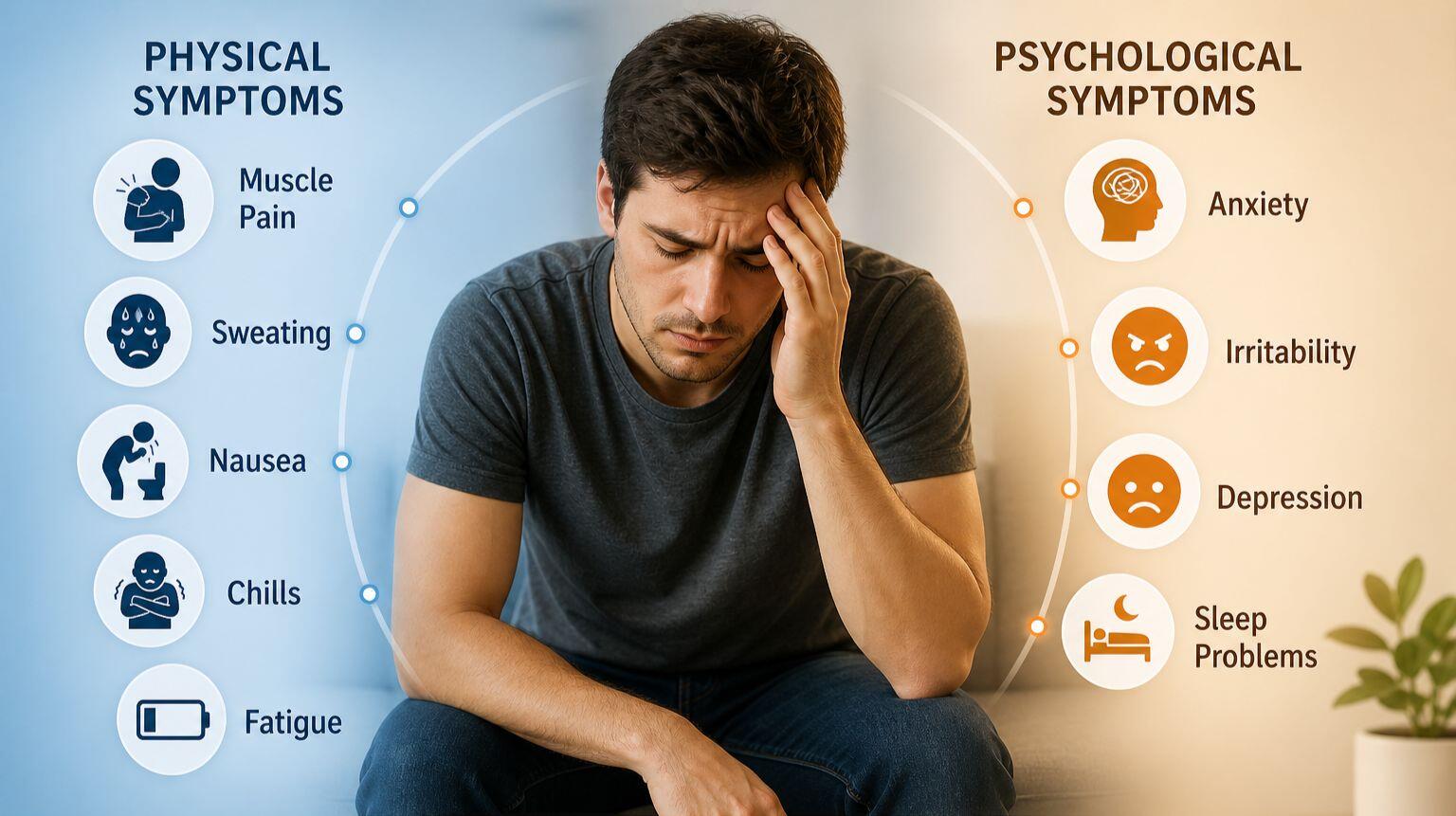
Withdrawal affects both the body and mind in different ways.
Physical symptoms:
- Muscle pain
- Sweating
- Nausea
- Chills
- Fatigue
Psychological symptoms:
- Anxiety
- Irritability
- Depression
- Sleep problems
These opioid withdrawal symptoms can shift in intensity as the body adjusts over time.
Medical Treatment Options for Opioid Withdrawal
Medical care can help reduce discomfort and lower relapse risk during withdrawal.
Common treatment options include:
- Suboxone – Helps reduce cravings and withdrawal intensity
- Methadone – Supports stabilization during withdrawal
- Clonidine – Helps manage anxiety, sweating, and physical symptoms
These options are often part of opioid withdrawal treatment under medical supervision.
Risks of Withdrawal Without Medical Support
Trying to stop opioids without support can increase difficulty during the process.
Possible risks include:
- Severe dehydration
- Increased cravings
- Higher chance of relapse
- Emotional distress
- Sleep disruption
These challenges are why structured care is often recommended during early recovery.
Why Medical Detox Is Important
Medical supervision can make the withdrawal period safer and more manageable. It provides support during the most intense stages and helps monitor physical and emotional changes.
Those looking for medical detox for opioid withdrawal often benefit from a structured environment where symptoms can be managed carefully.
For individuals exploring rehab in Dana Point, having medical guidance can help reduce risks during early recovery and support a more stable transition.
Conclusion
Opioid withdrawal does not follow the same timeline for everyone, but most people experience a similar pattern of early symptoms, peak intensity, and gradual improvement. Understanding how long opioid withdrawal lasts can help reduce uncertainty and prepare for each stage of recovery.
Having support during this process can make a significant difference. At Pacific View Detox, individuals can access care that focuses on safety and stability during withdrawal, helping them move into the next stage of recovery with greater confidence.
Taking the first step toward help can change the direction of recovery. Reach out to Pacific View Detox today and explore guided support and take control of the process in a safer, more structured way.
FAQs
1. How long does opioid withdrawal usually last?
It can last from a few days to a couple of weeks, depending on the type of opioid and duration of use.
2. When do opioid withdrawal symptoms peak?
Symptoms are usually strongest between day 1 and day 3.
3. What are the first signs of opioid withdrawal?
Early signs include anxiety, muscle aches, sweating, and restlessness.
4. Can opioid withdrawal be dangerous?
It is rarely life-threatening but can lead to severe discomfort and relapse risks without support.
5. What helps manage opioid withdrawal symptoms?
Medical treatment, hydration, rest, and supervised detox can help reduce symptoms safely.