
Is Adderall an Opioid Drug? A Complete Medical Explanation
Adderall and opioids are both commonly discussed when it comes to prescription drug use, which often leads to confusion about how they are related. Many people wonder if Adderall is an opioid drug when trying to understand how these medications affect the body and whether they carry similar risks. While both can be misused and may lead to dependence, they belong to completely different drug categories and work in very different ways.
According to the U.S. Drug Enforcement Administration, Adderall is classified as a Schedule II controlled substance due to its potential for misuse, even though it is widely prescribed for conditions like ADHD. This highlights the importance of understanding how it works and how it differs from opioids, which are primarily used for pain relief.
At Pacific View Detox, individuals often receive support when dealing with prescription medication misuse, helping them better understand risks and available recovery options.
Objective
This blog explains whether Adderall is an opioid, clarifies its drug classification, explores how it affects the brain, highlights risks, and helps readers understand when to seek professional support for misuse.
Key Takeaways
- This guide clearly explains the difference between Adderall and opioids to remove common confusion
- It breaks down how Adderall works in the brain and why it can lead to dependence
- You will learn why Adderall is classified as a controlled substance
- It highlights risks such as overdose symptoms and mental health effects
- It explains when to seek help and what treatment options are available
What Is Adderall, and What Drug Class Does It Belong To?
Adderall is a prescription medication made from a combination of amphetamine salts. It is used to treat ADHD and narcolepsy by increasing focus and alertness.
The adderall drug class is a central nervous system stimulant. This means it increases activity in the brain rather than slowing it down.
Key points about Adderall include:
- It boosts attention and concentration
- It increases energy levels
- It affects brain chemicals like dopamine
This makes it very different from opioids, which are designed to reduce pain and create a calming effect.
What Are Opioids and How Are They Different From Adderall?
Opioids are a class of drugs used mainly for pain relief. They work by attaching to opioid receptors in the brain and blocking pain signals.
Here is a simple comparison:
| Feature | Adderall (Stimulant) | Opioids |
|---|---|---|
| Purpose | Improves focus | Relieves pain |
| Brain effect | Increases dopamine activity | Blocks pain signals |
| Energy level | Increases alertness | Causes relaxation |
| Risk | Dependence possible | High addiction risk |
This comparison clearly shows that Adderall is not an opioid. They affect the body in completely different ways.
Common Misconceptions About Adderall and Opioids
There are several misunderstandings that lead people to believe Adderall and opioids are the same. Clearing up these misconceptions can help prevent misuse and confusion.
Some common myths include:
| Misconception | Reality |
|---|---|
| Adderall works like a painkiller | Adderall does not relieve pain. It increases alertness and brain activity. |
| All addictive drugs are opioids | Many drug types, including stimulants like Adderall, can lead to dependence. |
| Prescription drugs are always safe | Even prescribed medications can be harmful if misused or taken incorrectly. |
| Adderall has the same effects as opioids | Opioids slow down the body, while Adderall increases brain activity and energy levels. |
Is Adderall a Controlled Substance and Why?
Many people ask if Adderall is a controlled substance, and the answer is yes. Adderall is classified as a Schedule II controlled substance in the United States.
This classification means:
- It has accepted medical uses
- It carries a high potential for misuse
- It can lead to dependence if not used properly
Because of these risks, it is only available through a prescription and should be used exactly as directed.
How Adderall Affects the Brain and Dopamine System
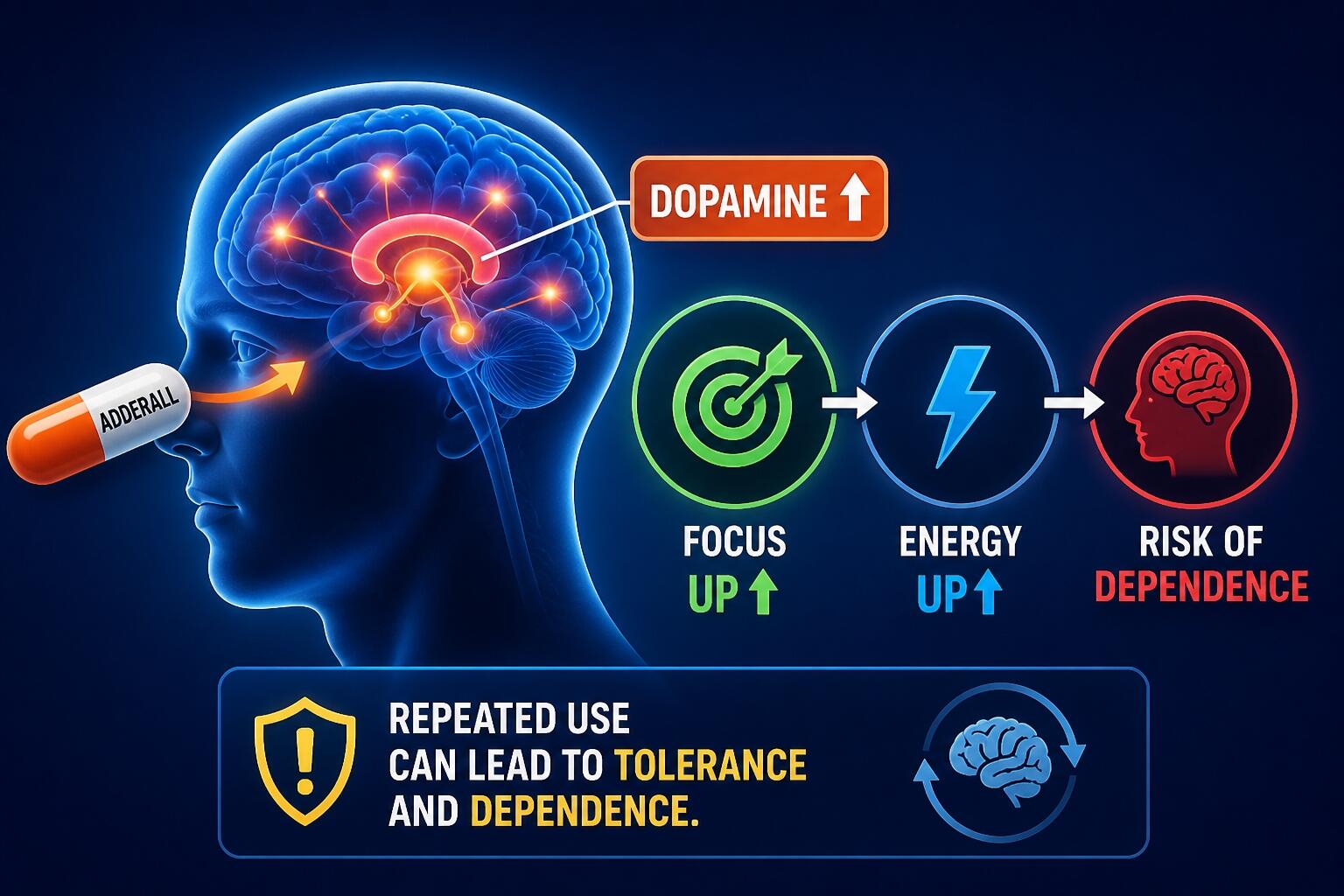
Adderall works by increasing the levels of dopamine and norepinephrine in the brain. These chemicals are responsible for focus, motivation, and alertness.
Common adderall effects include:
- Improved concentration
- Increased energy
- Better attention span
However, repeated use can lead to changes in how the brain functions. Over time, the brain may rely on the drug to maintain these effects, which can lead to tolerance and dependence.
Can You Become Addicted to Adderall?
Yes, Adderall can be habit-forming, especially when taken in higher doses or without a prescription.
Signs of dependence may include:
- Needing more of the drug to feel the same effect
- Difficulty focusing without it
- Using it more often than prescribed
Some people also ask, does adderall cause anxiety, and in certain cases, it can. Higher doses or misuse may increase feelings of nervousness or restlessness.
When misuse becomes difficult to manage, seeking adderall addiction treatment can help address both physical and emotional effects.
Get Help for Adderall Misuse Today
Struggling with Adderall use or side effects? Get expert support, clear answers, and personalized treatment options to regain control.
Adderall Overdose Symptoms and Risks
Taking too much Adderall can lead to serious health problems. Recognizing adderall overdose symptoms early is important.
Common warning signs include:
- Rapid heart rate
- High blood pressure
- Severe anxiety or panic
- Confusion or hallucinations
- Chest pain
These symptoms require immediate medical attention, as they can quickly become dangerous.
When Adderall Use Becomes Dangerous
Adderall use may become risky when:
- Doses are increased without medical guidance
- It is combined with other substances
- It is used for non-medical reasons
Long-term misuse can lead to:
- Heart-related problems
- Mental health issues
- Increased risk of dependence
Recognizing these patterns early can help prevent more serious complications.
Getting Help for Adderall Misuse
If Adderall use starts affecting daily life, it may be time to consider professional support. Treatment can include medical care, therapy, and structured recovery programs.
For those exploring benzodiazepine rehabs in California, some treatment centers also support individuals dealing with stimulant misuse alongside other substances.
Conclusion
Adderall is not an opioid, but it is still a powerful medication that requires careful use. Understanding that Adderall is adderall an opioid drug helps clear confusion and highlights the importance of using medications safely.
If you or someone you know is struggling with misuse, taking action early can make a real difference. Exploring support options at Pacific View Detox can be a strong first step toward regaining control and building a healthier, more stable future. Reaching out for help can open the door to the right care and support when it is needed most. With the right guidance, it is possible to move forward with greater confidence and stability.
FAQs
1. Is Adderall an opioid or a stimulant?
Adderall is a stimulant, not an opioid. It increases brain activity rather than reducing pain.
2. Why is Adderall addictive?
It affects dopamine levels in the brain, which can lead to dependence over time.
3. What happens if you misuse Adderall?
Misuse can lead to anxiety, heart problems, and increased risk of dependence.
4. Can an Adderall overdose be dangerous?
Yes, it can cause serious symptoms like rapid heart rate and confusion that require immediate care.
5. How is Adderall different from opioids?
Adderall increases alertness, while opioids reduce pain and create a calming effect.